

How To Use Art As A Statement Piece In Your Home
Art has been woven into the very fabric of human history. Across cultures and centuries, it has been used not just for decoration, but as a means of storytelling, emotional expression, and cognitive stimulation.
In interior design, art is more than just an aesthetic choice—it plays a crucial role in shaping our perception, influencing our mood, and even enhancing cognitive function. Research in neuropsychology and environmental psychology suggests that visual sensory engagement—the way our brain processes art, colour, and form—can impact stress levels, memory, and overall mental well-being.
The best part? You don’t need a massive budget to incorporate art into your space. From sculptures to murals to dramatic lighting, there are endless ways to create a visually stimulating and cognitively enriching environment.
Let’s explore how you can harness the power of art to enhance both your interior spaces and your mind.
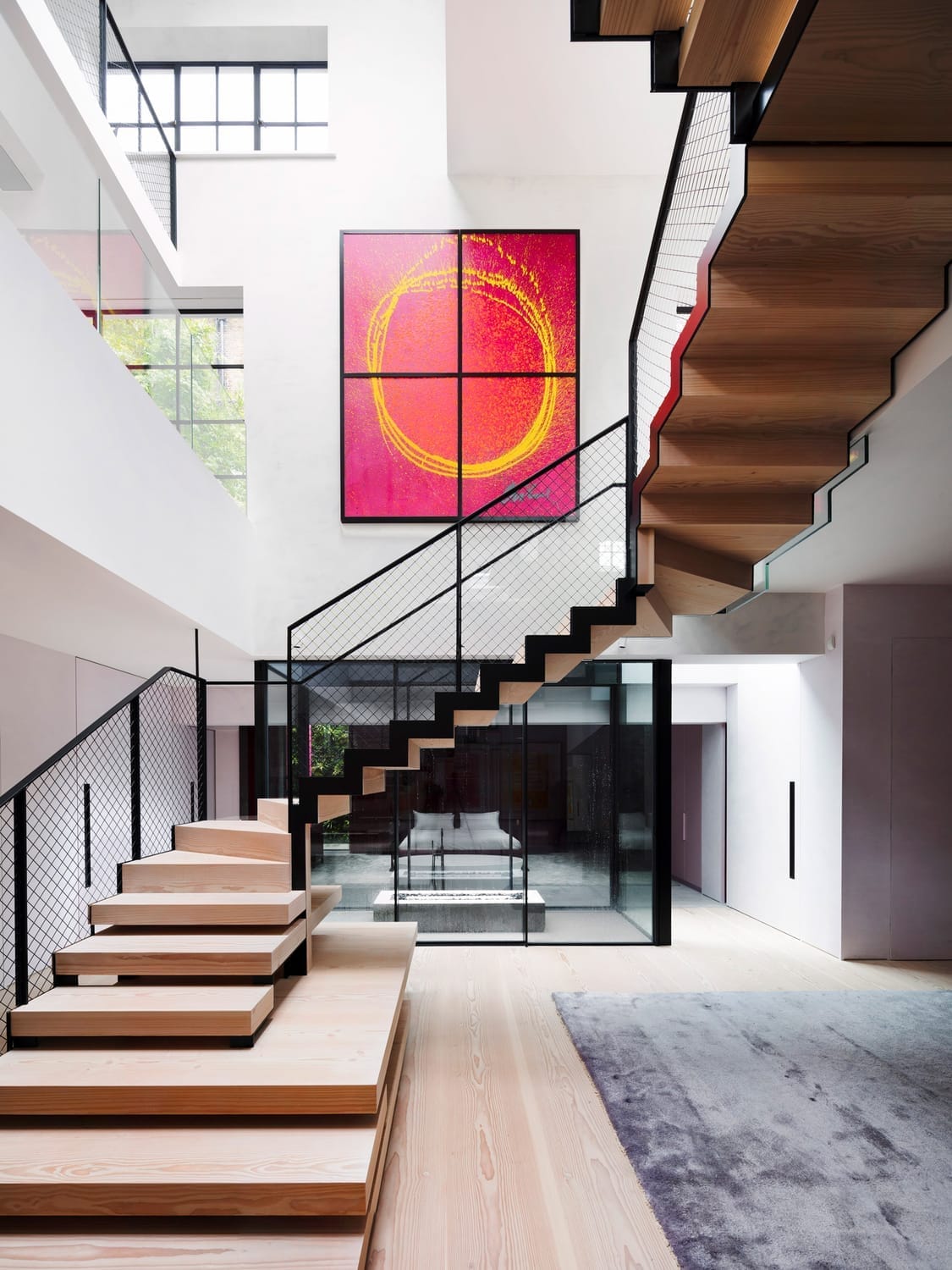
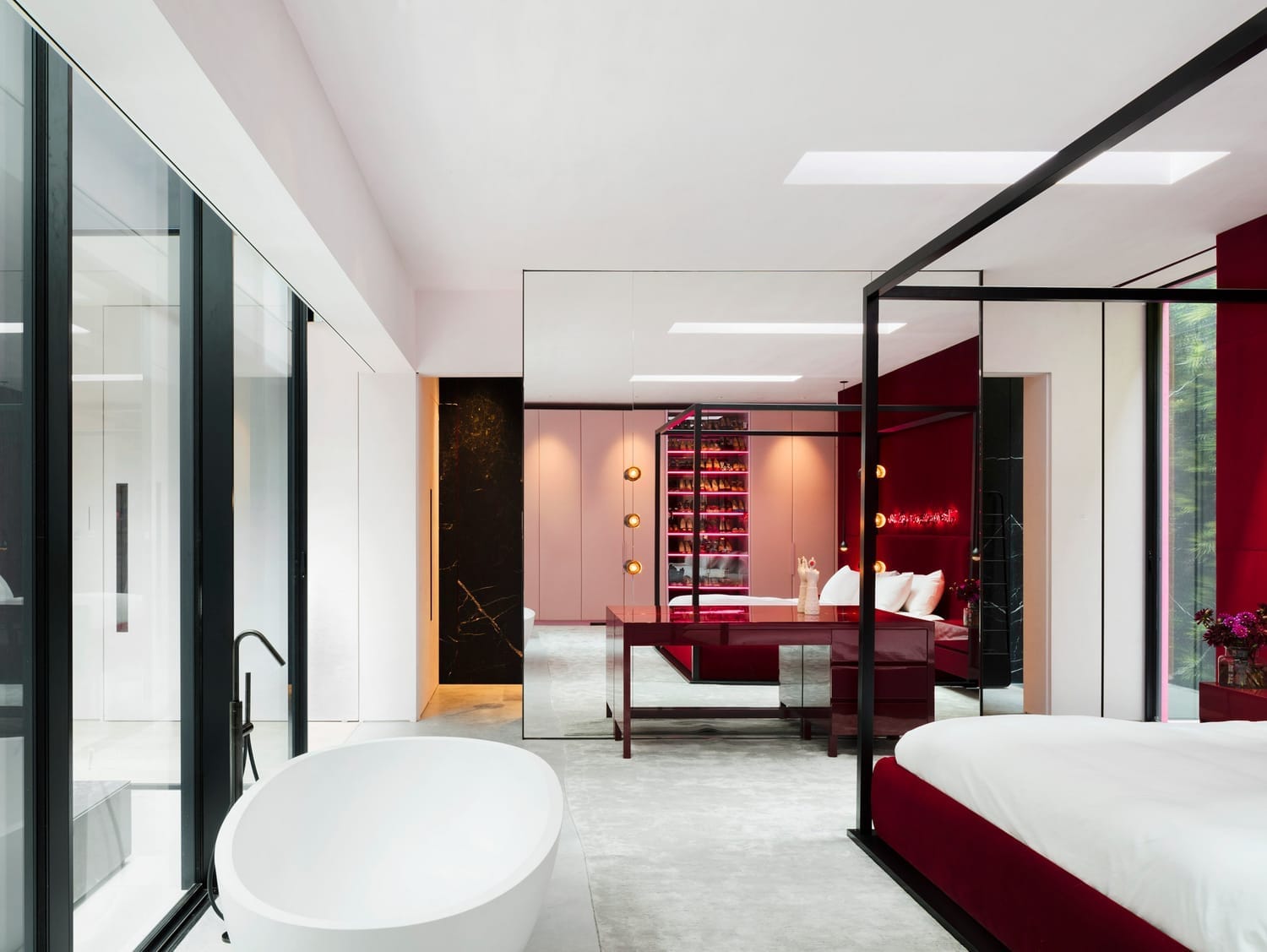
Art and the Brain: The Science of Visual Engagement
Before diving into design strategies, let’s understand why art has such a profound effect on our well-being.
The Neuroscience of Art in Interiors
Studies in neuroaesthetics—a field that explores how the brain perceives and responds to art—have found that art engages multiple brain regions, including:
Thevisual cortex (which processes shapes, colours, and contrast)
Theprefrontal cortex (which is involved in decision-making and emotional response)
Thelimbic system (which regulates emotions and memory)
All simply, art in your environment can actively stimulate your brain, improve your cognitive function, reduce your stress levels, and enhance memory recall.
How Visual Stimulation Impacts Cognitive Health
You are wondering how looking at art can engage the brain to improve brain and body health?
When we spend time in spaces with bold art, murals, or sculptural elements, our brain becomes more active, helping us think in new ways, spark creativity, and solve problems more easily.
Viewing art with rich textures and colour contrasts has been shown to reduce cortisol (the stress hormone) and enhance emotional resilience.
Elements with soft, flowing, organic shapes like those mimicking nature-inspired art or abstract paintings can promote relaxation and reduce mental fatigue.
Now that we understand the science, let’s explore practical and unexpected ways that you can introduce art into your home interior for both aesthetic and cognitive benefits.
Art Beyond the Canvas: Expanding Your Perspective
And No, It Doesn’t Have to Be a Wall Hanging

For many, art equals paintings on a wall. But art is so much more than that.
Once upon a time (okay, not that long ago), if you used the word 'art', I would immediately think of paintings on a wall.
That was it.
But thankfully, my years as an interior designer have taught me to see expressions of art everywhere—and you will, too.
Many expressions of art transcend paint media on canvas. Sculptures, carvings, the ubiquitous but always intriguing forms and dimensions of paintings and even furniture pieces like this gorgeous, limited edition sideboard, can all function as works of art that elevate your interior space.
Now that we know that art comes in many ways, shapes and forms, let's dive into the good stuff – how to play up art.
Sculptures & carvings
Was the first thing you thought when you read sculptures and carvings 'conventional' interpretations of the words?
Sculptural furniture transforms interior spaces by adding depth, movement, and artistic expression.
Unlike conventional pieces, it creates visual contrast and layering, making a space feel more dynamic and engaging.
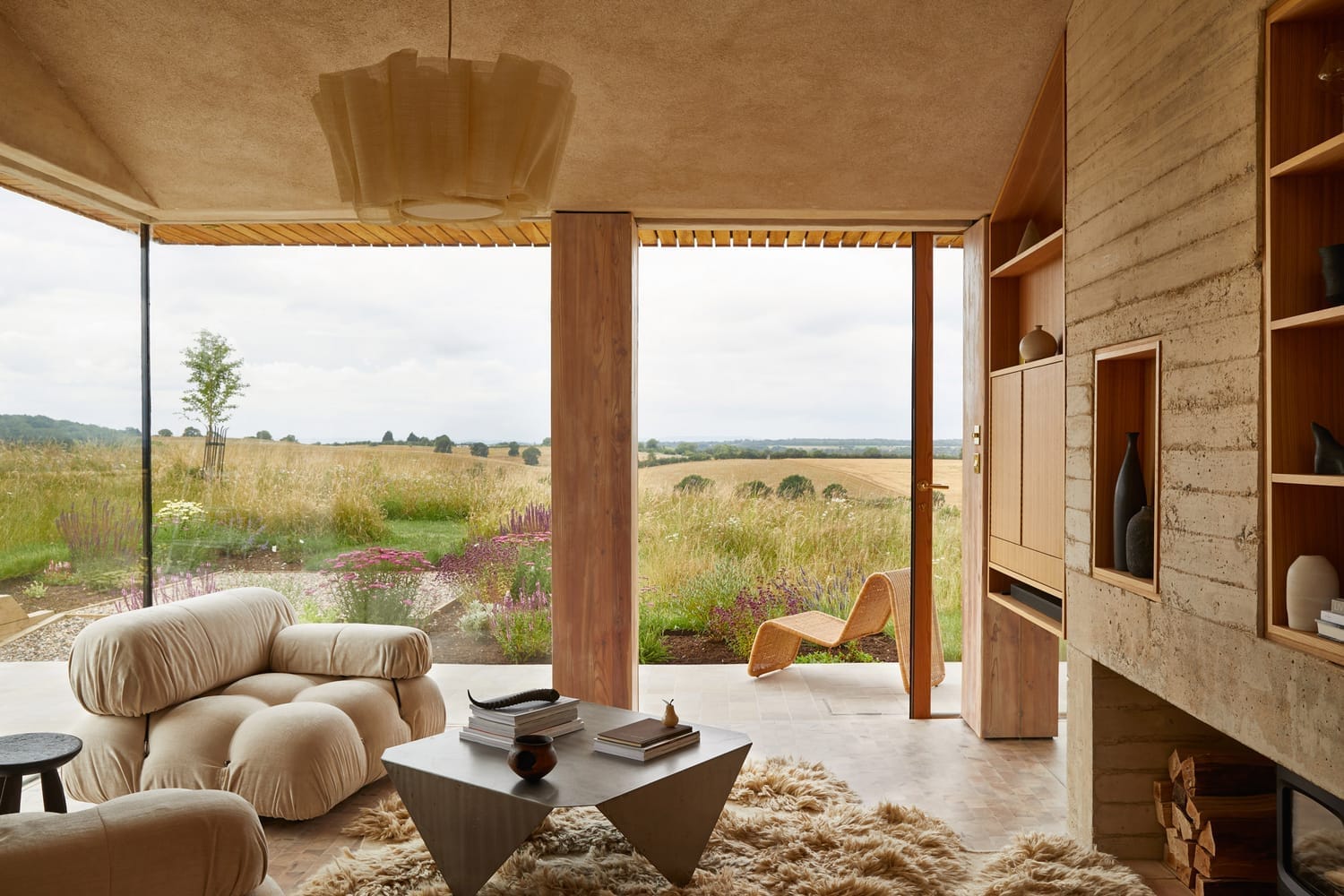
When introduced in the form of furniture elements or light fixtures, your entire space comes alive with a 3-dimensional quality that draws the eyes around the room, giving your brain micro doses of novelty needed to keep your creative spark engaged. This living room with a view to a beautiful landscape is at once mirroring the fluidity and texture of nature, as well as creating visual breaks with more angular pieces for a bit of tension.
Whats ot to love?
When used as a sensory experience, fluid, curvilinear designs promote a sense of tranquility, while bold, geometric forms add drama and energy.
So whether the goal is to use it as a statement piece or to complement architectural elements, sculptural furniture blurs the line between function and art, transforming interiors into immersive, visually stimulating environments.
Architectural details
Architectural details are the spatial storytellers of the home.
The forms and dimensions they take can influence how we perceive movement, depth and even time.
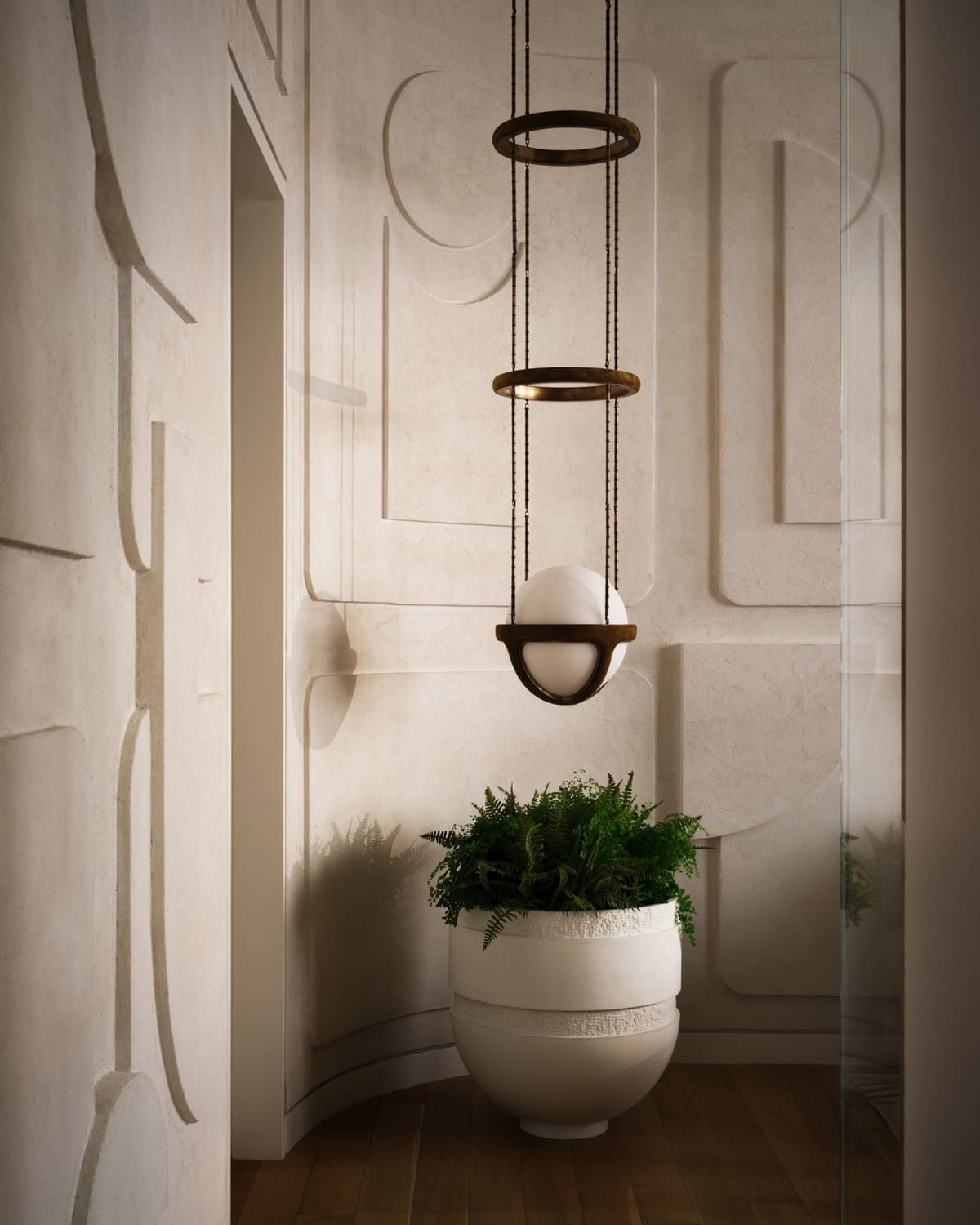
Sculptural wall moldings like this one here takes my breath away.
Sculptural staircases, archways and coffered ceilings also create micro-landscapes of solid forms, shadow and light, engaging and shifting our sensory experience throughout the day.
Beyond mere aesthetics, they serve as neurological anchors, providing the brain with focal points that alleviate cognitive fatigue in overly minimalist spaces.
Wouldn't you say that this space shown here passes the test of minimalism but still comes with a LOT of visual intrigue? This is because, beyond the use of neutral tones, layers and dimension has been introduced - and that brass accent adds a touch of elegance to the whole scheme.
In a digital age where everything is flat, tactile elements like wood, embossed panels, and arches reconnect us to reality, making a room feel grounded, immersive, and emotionally resonant.
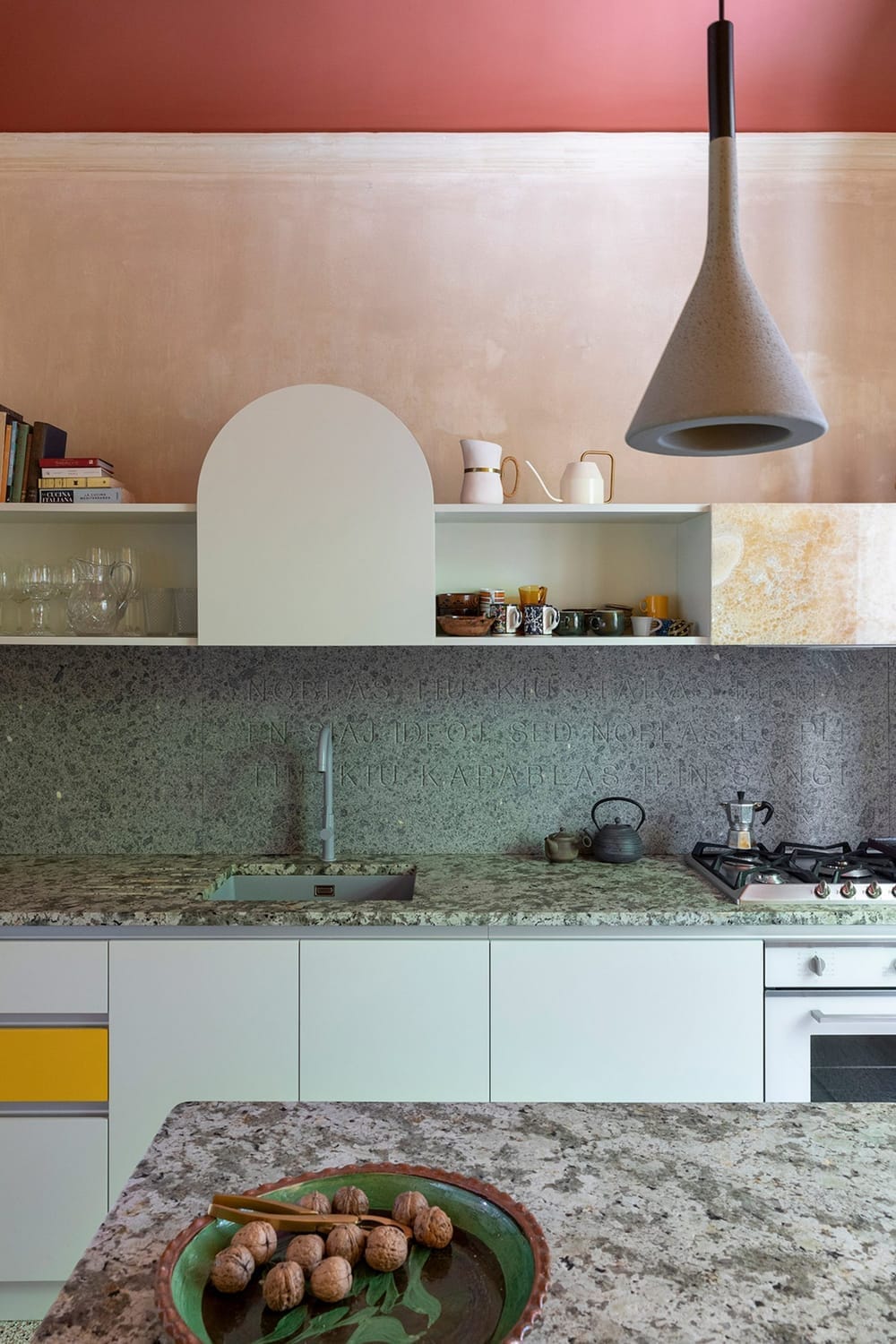
Statement furniture and lighting pieces
Like this gorgeous pairing of kitchen shelving and pendant lighting fixture from this apartment designed by 02A, ( showcased on Dezeen) is functional art that serves a purpose while creating visual interest.
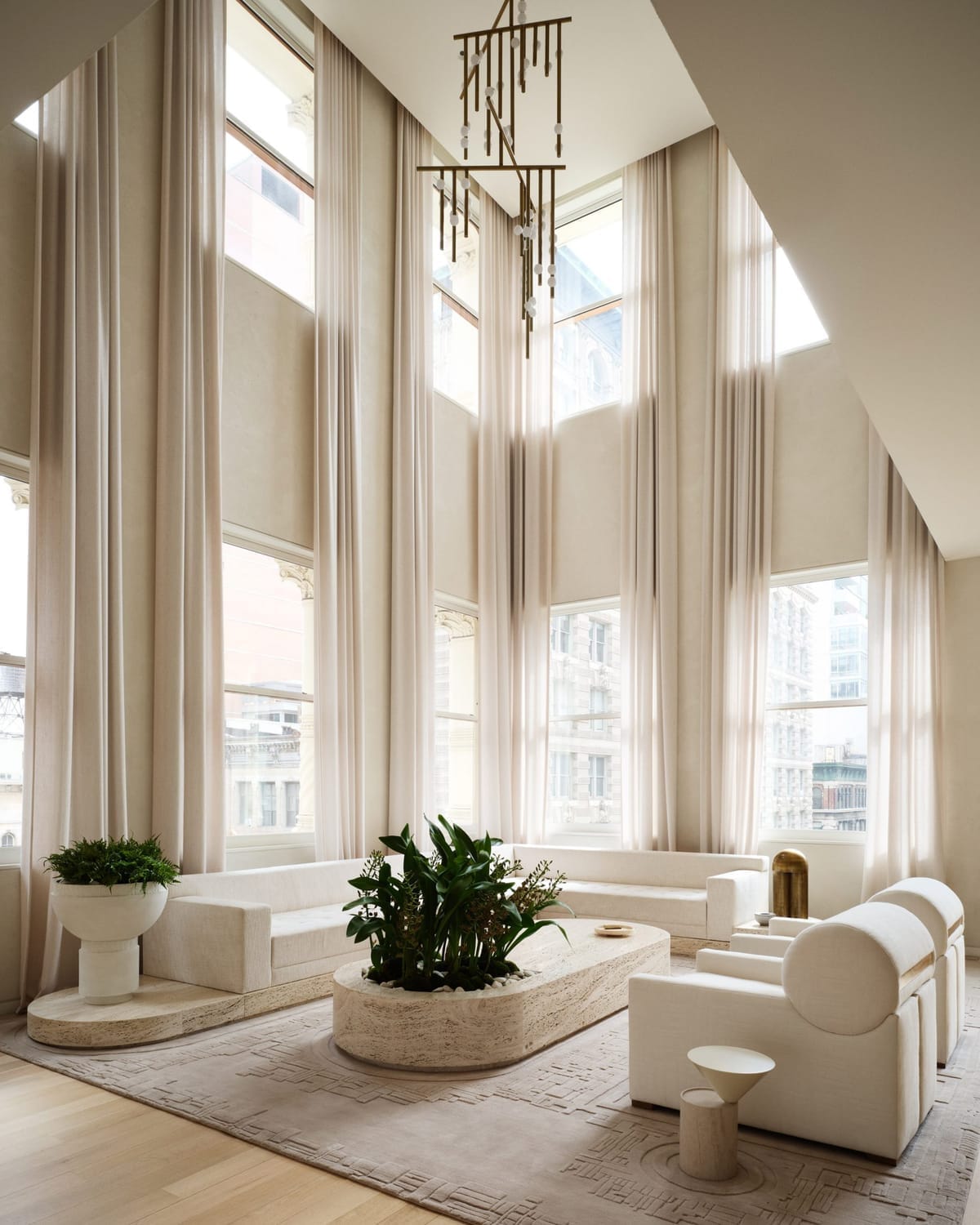
Textiles & tapestries
Textiles and tapestries don’t just add warmth and texture to a space—they are a great way to include acoustic buffers, alter spatial perception, and create a dynamic sensory experience.
Unlike static wall art, fabric hangings like this floor to ceiling window treatment add a sense of dimension and grounding to what would have otherwise been perceived as a cavernous space, making this room feel more cohesive.
The tactile nature of textiles invite engagement, evoking a primal sense of comfort and connection, which is often overlooked in rigid, hard-surfaced interiors.
In a digital world dominated by screens and flat visuals, woven and hand-painted textiles bring back the human touch, carrying the imperfections and organic beauty of handcraftsmanship.
They also function as visual temperature regulators—deep, saturated fabrics absorb light and promote a feeling cosiness, while lightweight, airy textiles feel weightless, making a room feel more open and expansive.
Textural art
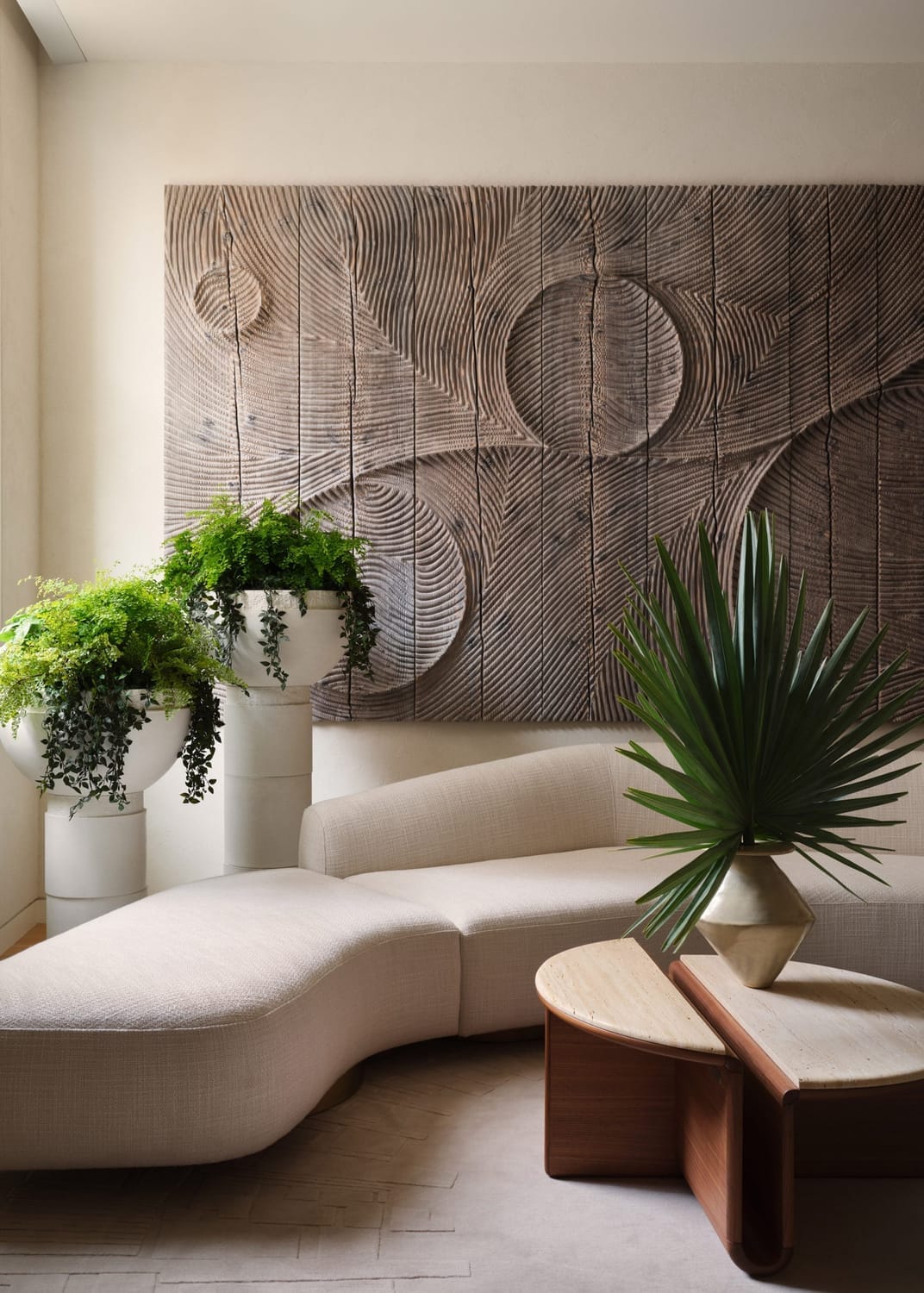
This is my current obsession, in part because i love me a multidimensional object.
Textural multidimensional wall art can be used to break up visual monotony and activate spatial awareness on an otherwise flat surface.
Unlike traditional art, it casts shifting shadows throughout the day, creating a living, breathing interaction between light, shadow and form.
This use of dimension in niterior spaces is an homage to a book i love to read 'In Praise Of Shadows'. It speaks to how the way we see light cannot exist without its relationship with solid forms that create the shadows that articulate light in dynamic ways.
This sensory dynamism subtly influences mood; organic textures like raw stone or sculpted wood evoke a sense of primal comfort, while metallic or high-gloss surfaces add an almost futuristic depth, bending perception.
Neuroaesthetically, raised textures like the one shown here, stimulate haptic memory – the brain's ability to feel through sight – bridging the gap between passive observation and subconscious emotional engagement.
In minimalist spaces, it anchors the eye amidst simplicity.
In maximalist settings, it orchestrates movement, guiding perception across layers of complexity.
How To Use Art?
Use Lighting
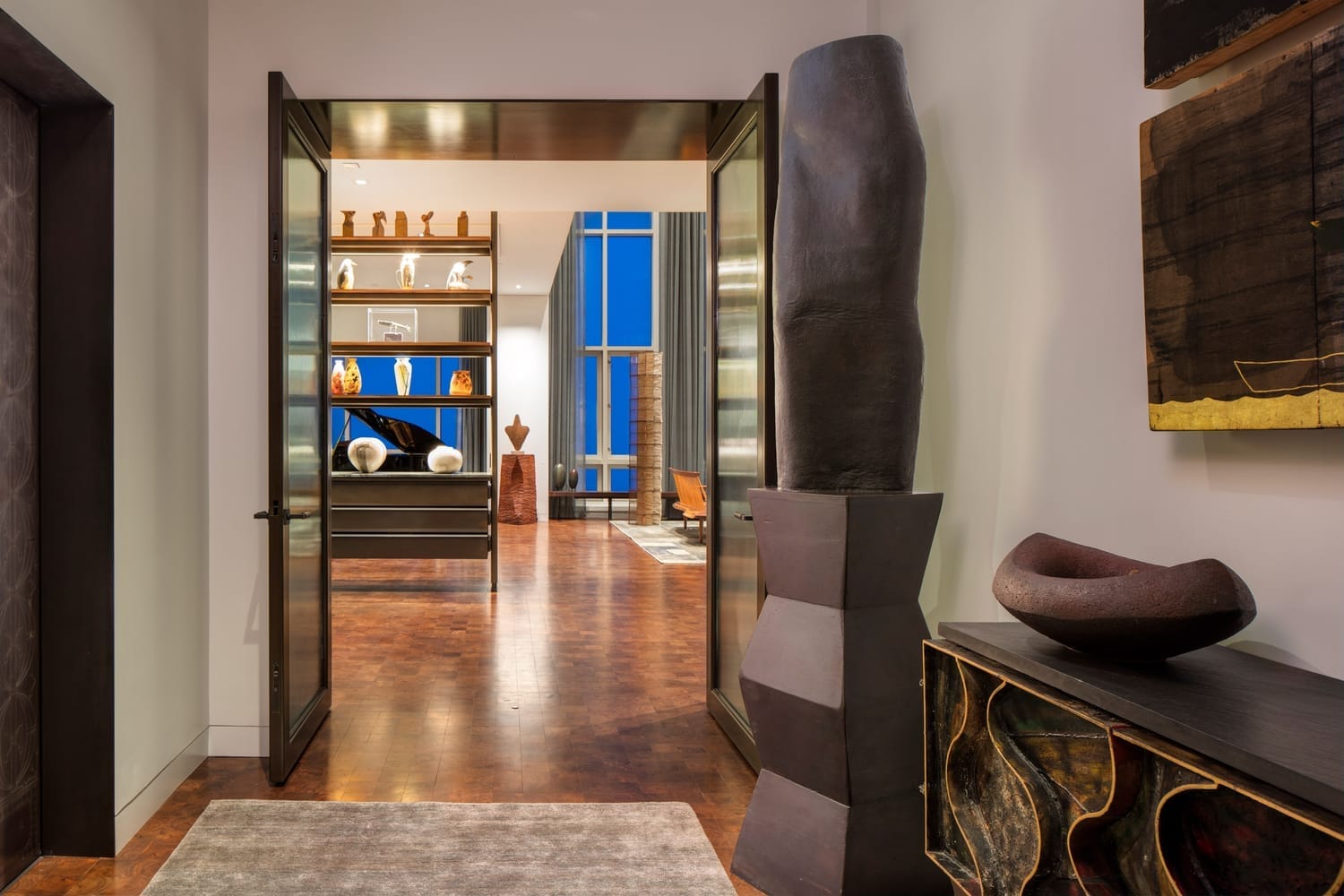
Natural light is king – Sunlight has the highest Colour Rendering Index (CRI), meaning it makes colours look more vibrant and true to life.
Spotlighting is your friend – Use picture lights or adjustable lamps to direct attention to your art.
Layer your lighting – A mix of ambient, task, and accent lighting creates depth and drama in a space.
Lighting isn’t just about seeing art better—it’s about feeling the energy of a space. This is why interior designers often refer to a lighting plan as 'painting the space with light'.
Use it to your advantage.
Where to Put Art?
Literally Anywhere.
Who says art has to be confined to walls or sculptures on pedestals?
Art is an experience, not just an object, and when you start thinking beyond the obvious, your space transforms into something truly immersive.
Statement furniture as functional art—a sculptural chair, an intricately inlaid table, or a hand-carved headboard can be just as impactful as any gallery piece.
Architectural details as living art—think textured wall panels, undulating ceilings, or hand-painted floors that shift the entire perception of a room.
Lighting as sculpture—a well-placed, dramatic light fixture isn’t just illumination; it’s a play of shadows, angles, and movement that redefines a space at every hour.
Unexpected placements—art leaning casually against a wall, woven into bookshelves, or suspended from the ceiling in kinetic form invites interaction rather than passive observation.
Layered dimensions—mixing different forms of artistic expression at various heights and depths creates a dynamic, ever-evolving environment that reshapes itself as you move through it.
Art is meant to challenge perception, engage the senses, and disrupt the ordinary.
Forget the rules—if it sparks curiosity, invites conversation, or makes you feel something, it belongs.
At the end of the day, how you express art is personal. It’s about how a space feels, not just how it looks.
And now, we know that it’s not just our emotions that art influences—it’s our brain function, stress levels, and cognitive health too.
So, next time you’re choosing art for your space, think about this:
- Does it inspire you?
- Does it calm or energise you?
- Does it make your space feel uniquely yours?
If the answer is yes, you’re on the right track.
What’s your favorite way to use art in your space?
Do you prefer bold statement pieces or subtle, calming textures?
Let’s chat in the comments!
SHARE




POST CATEGORY