

The Lost Art of Domestic Rituals: Reclaiming Biological Honesty in Modern Homes
Inherited Aesthetics, Nervous System Regulation, and the Case for Biological Honesty in Your Home
I have always preferred to do my own hair: braids, wash and condition day, in between detangling day. I find this activity to be a sensory rich and calming experience, compared to if I visited a salon with all the accompanying noise, unfamiliar human energies and a handler whose purpose is to get my hair done and get me out of her chair in record time.
This preference I believe came from back when I was younger. Every weekend, my mother would wash, dry, stretch and braid my hair in preparation for the school week. This activity almost always involved my grandmother, a sweet treat to keep me from being a menace and sometimes, a visit from a friend and when these events took place, there were always stories told (sometimes arguments, too).
This ritual ended when my hair went from a natural coily to straight permed. There was no longer a reason for my mother to perform these rituals anymore, as that task was handed over to a professional hair stylist who was skilled in the art of managing my hair in order to keep it conformed to this unnatural way of being.
I went back to being natural in 2019. I have never been to a hair stylist since.
Over the weekend, as I was going through the motions of hair braiding, I wondered about traditional Yoruba hairstyling which ended with a question I have not been able to set aside since.
The question is this: how many of the design decisions in our homes do we intentionally make, and how many were made for us?
What Your Brain Mistakes for a Personal Preference
Daniel Kahneman spent much of his career studying the gap between what we believe we are choosing and what our brains are actually doing. One of his central insights is that System 1 thinking, the brain's fast, automatic pattern-recognition function, operates largely below conscious awareness and consistently mistakes repetition for truth.
When we encounter the same aesthetic arrangement with sufficient frequency, we stop evaluating it and begin experiencing it as the acceptable way to be. This is not a flaw in human cognition. It is an efficiency mechanism. But it becomes a significant problem when the preferences being repeated were never designed with your biology in mind.
How many of the design decisions in our homes do we intentionally make, and how many were made for us?
The Design System the Yoruba Tradition Already Had
This is where the Yoruba parallel becomes structurally precise in a way I did not initially anticipate.
Pre-colonial Yoruba hairstyling was a design system in the most serious meaning of that phrase.
Hairstyle techniques were developed in direct relationship with the biological characteristics of the hair, working with its natural texture and structure rather than against them.
Beauty and function were not competing considerations. They were the same consideration expressed through craft and accumulated knowledge across generations.
The result was an aesthetic tradition rooted entirely in biological honesty.
Beauty and function were not competing considerations.
They were the same consideration expressed through craft and accumulated knowledge across generations.
The result was an aesthetic tradition rooted entirely in biological honesty.
How a Framework Is Replaced Without an Argument
What colonisation disrupted was not the hairstyle. It disrupted the framework through which beauty was evaluated.
Straight hair, reflecting Western European physical characteristics, was positioned as professional, educated, and modern, whilst traditional styles were reframed as backward within that same logic.
This shift did not happen through argument or evidence. It happened through the mechanism Kahneman described: sufficient repetition from sufficiently authoritative sources, until a preference became an assumption, and an assumption became something that felt indistinguishable from objective truth.
Interior Design Has Run the Same Process
Interior design has run the same process, for many of the same historical reasons, with considerably less visibility.
The assumptions most people carry about what constitutes a beautiful or well-designed home, that white walls signal refinement, that open space signals success, that sustained artificial brightness signals productivity, that visual clutter reveals some failure of personal discipline, were not arrived at through rigorous study of what the human nervous system actually needs to function at capacity.
They were arrived at through trend cycles, the commercial interests of an industry that profits from the perpetual replacement of one aspiration with the next, and a media infrastructure built around the photographic requirements of spaces that read well in print.
They became standard not because they serve human biology, but because they achieved sufficient cultural dominance to feel inevitable.
They became standard not because they serve human biology, but because they achieved sufficient cultural dominance to feel inevitable.
The Quiet Loss: The Designed Capacity for Ritual
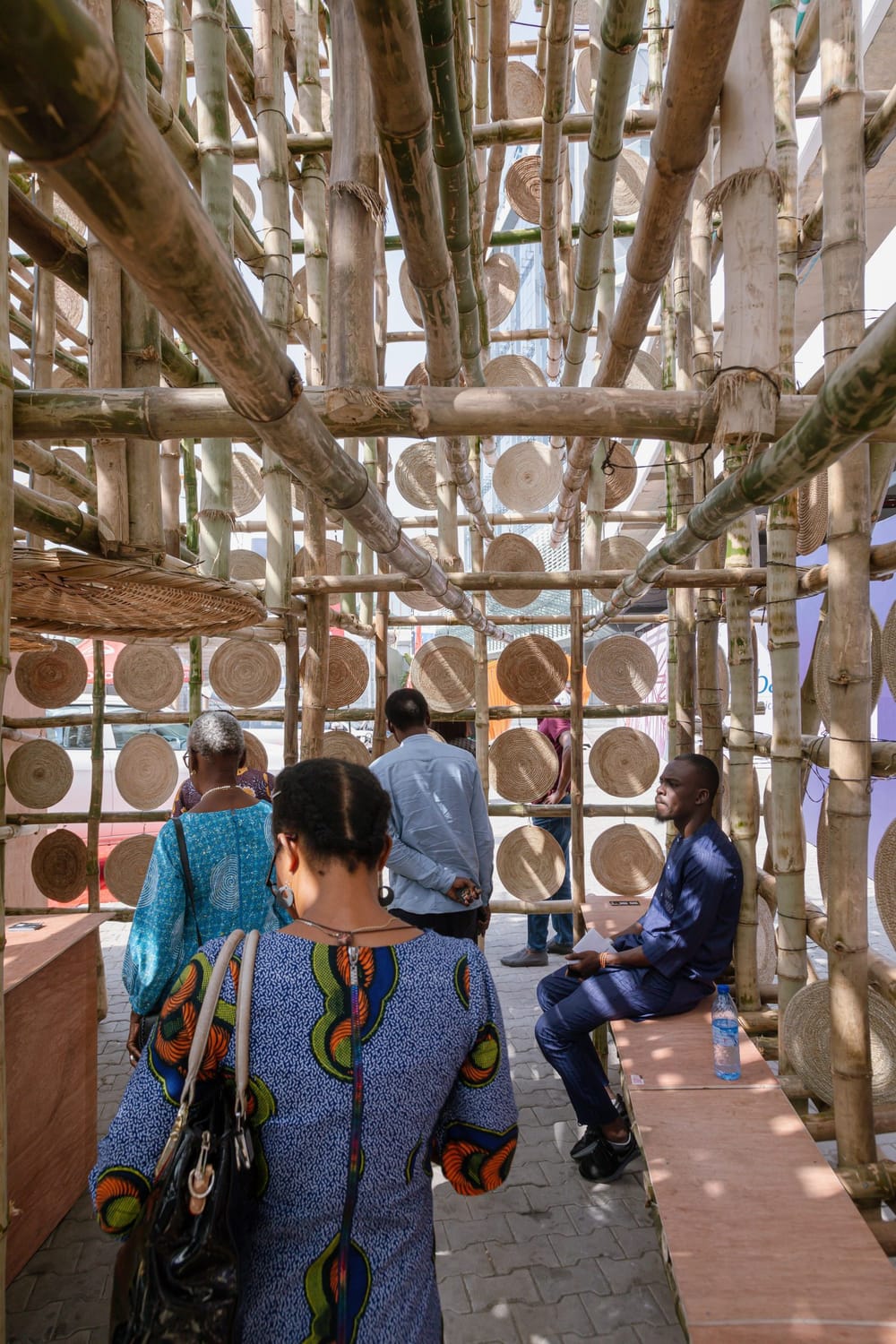
Something else was lost in that process, and it receives considerably less attention: the designed capacity for ritual.
The body keeps the record of both losses. The cost of inhabiting a home built around inherited cultural preferences rather than specific biological needs registers as the persistent low-level fatigue that settles in after a few hours at home, as the inability to genuinely rest in the one environment built for rest, as the quiet and persistent sense that the space is visually coherent and experientially insufficient.
What many people experience as a vague domestic disconnection, a sense of shared purpose that the home no longer structurally supports, is in significant part the nervous system registering the absence of the spatial and temporal conditions that once made ritual possible. Not grand ceremony, but the small, repeated, relational practices that Esther Sternberg's research on healing environments identifies as central to genuine physiological recovery: shared meals, unhurried conversation, the kind of quiet co-presence that a well-designed space invites rather than incidentally permits.
What the Yoruba design tradition understood, and what most contemporary interiors have relinquished, is that a space designed in service to the people who live there looks different depending on who those people are and what those people need to do inside it together.
Sensory profile, nervous system regulation, life stage, relational configuration, and the particular rituals through which a household maintains its coherence are the variables that should govern design, not the preferences of an industry operating at sufficient scale to make its preferences feel universal.
What many people experience as a vague domestic disconnection is in significant part the nervous system registering the absence of the spatial and temporal conditions that once made ritual possible.
What Reclaiming This Looks Like in Practice

Reclaiming that capacity does not require a complete redesign. It requires identifying which spaces in your home could structurally support a repeated human practice and then removing what is currently preventing that practice from taking root.
A kitchen reconfigured around conversation rather than workflow.
A table returned to the room from which it was absent.
A surface cleared not for aesthetics but to allow something to be made there, or shared there, or begun there.
The nervous system responds to these interventions not because they are beautiful in any conventional sense but because they restore the environmental conditions under which it knows how to regulate itself.
Beauty is not a fixed truth. It is what a culture has learned to value, passed down through enough channels until the origin becomes invisible.
Once that is understood, a more precise question becomes available: what would your home look like if it were designed around the biology and the relational life of the people actually living inside it?
How would your space need to change to make room for the rituals that are currently happening nowhere?
A space designed in service to the people who live there looks different depending on who those people are and what those people need to do inside it together.
Take Action Today
If something in this article named an experience you have been carrying without language for it, there is a structured path forward.
Understand Your Sensory Architecture First
Before any design decision is made, your nervous system's relationship with your environment needs to be decoded. The Sensory Intelligence Diagnostic is where that begins. It is not a questionnaire or a moodboard exercise. It is a neuro-architectural assessment that maps your sensory thresholds, identifies the friction zones inside your current home, and produces a precise written report that can be taken directly to your interior designer, architect, or used as the foundation for your own implementation.
Without this baseline, design decisions remain aesthetic speculation. With it, they become neurophysiological calibration.
Request the Sensory Intelligence Diagnostic →
Go Deeper at Your Own Pace
If you would prefer to begin exploring and implementing changes independently, the e-guides offer practical, neuropsychology-grounded strategies you can work through in your own time and at your own pace.
Track Your Environment Over Time
The Sentient Home application was built to extend this work into daily life. It tracks your nervous system's response to your home environment over time, delivers micro-adjustments to light and sound based on your live bio-rhythms, and gives you the tools to audit any space for biological safety.
It is the ongoing infrastructure for everything the Diagnostic begins.
Explore The Sentient Home Application→
When you are ready for a guided redesign of your home, i offer interior design services that is informed by our methodology, The NeuroDesign Blueprint™.
Frequently Asked Questions: The Real Reason Why The Wellness Retreat Stops Working When You Get Home
1. What is sensory mismatch in the context of home design?
Sensory mismatch is the difference between how a space looks and how it functions for the people living in it.
A home may be visually coherent and even beautiful by conventional standards, yet still generate chronic low-level stress, fatigue or difficulty resting. This occurs because visual aesthetics and nervous system regulation are two distinct processes, and most contemporary design only addresses one of them.
2. How does System 1 thinking shape our design preferences without our awareness?
Daniel Kahneman's research has shown that the brain primarily operates through a fast, automatic mode of pattern recognition, mistaking repetition for truth.
When we see the same aesthetic choices over and over again in the media, on social platforms, in show homes and design publications, we no longer think about them. We just take them for granted and believe that they are the right or neutral way to organise a living space.
Most people make design choices within a framework handed to them, rather than arriving at it through any direct assessment of their own needs.
3.What made pre-colonial Yoruba hairstyling a design system in the serious sense of that phrase?
Pre-colonial Yoruba hairstyling was a design system because its techniques were developed in direct relation to the natural structure of the hair, working with it rather than against it.
The result was a tradition in which beauty and biological function were not considered separately.
The same was true of the social and relational functions of hairstyling: it communicated identity, status and belonging through a craft accumulated and transmitted across generations.
This is the standard by which a design system should be judged: does it serve the people for whom it was created, or does it try to force those people to fit into an external aesthetic ideal?
4. How did colonisation reshape aesthetic standards for the home, and what does that have to do with interior design?
The mechanism through which colonisation reshaped aesthetic standards was not primarily based on argument. Rather, it operated by positioning European physical and cultural characteristics as universal markers of refinement, education and progress, while reframing traditional practices as backward within that same logic.
This pattern was evident in hairstyling, dress, language, architecture and domestic organisation.
Interior design inherited this hierarchy directly; the current assumptions about what constitutes a well-designed home reflect the aesthetic priorities of a specific cultural tradition rather than a universal truth about what the human nervous system needs.
5. Why does a visually coherent home sometimes feel experientially insufficient?
This is because visual and biological coherence are not the same thing.
A home environment can appear well-ordered, aesthetically consistent and socially legible, yet still fail to provide the sensory conditions necessary for nervous system regulation.
If a home looks good in photographs but feels draining to live in, the design framework is probably only addressing surface-level aesthetics and not considering what the space is doing at a biological level.
6. What does it mean for a home to have a 'designed capacity for ritual'?
Ritual, in this context, does not mean ceremony; rather, it refers to a set of actions that are done regularly and that have a specific purpose, such as worship or tradition.
Instead, it refers to the small, repeated relational practices through which a household maintains its sense of coherence, such as shared meals, unhurried conversation and the quiet co-presence that a well-arranged space makes possible.
Research in healing environments has identified these practices as being central to physiological recovery.
7. What is biologically honest design?
Biologically honest design is based on the idea that spaces should be built around the specific biological, sensory and relational needs of their inhabitants, rather than inherited aesthetic conventions or the commercial priorities of a trend-driven industry.
The nervous system is treated as the primary client, with the design of a space assessed in terms of how it supports or undermines the physiological conditions required for regulation, clarity, and genuine rest.
Biologically honest design looks different for different people, and this is precisely what makes it unique.
8. Where do I begin if I want to reclaim agency over how my home actually functions?
The starting point is a sensory profile, which provides an accurate picture of the specific thresholds at which your nervous system finds coherence and begins to compensate.
Building on this, it becomes possible to identify which spaces in your home could support repeated human activity and what is currently preventing this.
This does not always require significant changes. What is required is precision: an understanding of how your home currently affects the people inside it and deliberate decisions about how it could affect them differently.
The NeuroDesign Blueprint was developed to provide this diagnostic foundation.
Selected Citations & Further Reading
On System 1 Thinking and Aesthetic Preference
Kahneman, D. (2011). Thinking, Fast and Slow. Farrar, Straus and Giroux. The foundational text on dual-process cognition. System 1, the brain's fast automatic function, operates below conscious awareness and consistently interprets repeated exposure as truth, directly underpinning the article's argument that inherited aesthetic preferences are experienced as objective reality rather than culturally conditioned choices. PubMed Central
On the Built Environment and the Nervous System
Coburn, A., et al. (2022). Built environment colour modulates autonomic and EEG indices of emotional response.
Frontiers in Psychology. PMC9786701. Using immersive virtual environments, this study found that interior colour conditions measurably affect both autonomic nervous system responses and central nervous system activity.
On Domestic Ritual and Relational Wellbeing
Fiese, B.H., Tomcho, T.J., Douglas, M., Josephs, K., Poltrock, S., & Baker, T. (2002). A review of 50 years of research on naturally occurring family routines and rituals: Cause for celebration? Journal of Family Psychology, 16(4), 381–390. This fifty-year review identifies family rituals, defined as repeated symbolic practices that communicate identity and continuity across generations, as powerful organisers of relational stability, particularly during periods of stress and transition.
The research distinguishes between routine (instrumental) and ritual (symbolic and relational), and identifies the latter as a significant factor in psychological and physiological health outcomes.
Hobson, N.M., et al. (2018). The psychology of rituals: An integrative review and process-based framework. Perspectives on Psychological Science.
This integrative review synthesises evidence from social psychology, cognitive science, anthropology, and neuroscience on the regulatory functions of ritual, identifying three primary mechanisms: the regulation of emotions, performance states, and social connection.
On Yoruba Design Tradition and Cultural Aesthetics
Oriire: African Mythology and Folklore Archive. Hairdressing and Hairstyles in Yorubaland: History, Nature, Dynamics and Significance. oriire.com.
This piece documents the multi-layered symbolic and social functions of Yoruba hairstyling, establishing that traditional styles functioned as identity markers, social communicators, and representations of the individual within their community.
The Yoruba adage cited, that one does not plait or cut a person's hair without the consent of the owner of the head, reflects a foundational principle of design sovereignty that has direct structural relevance to the article's central question.
Africa Rebirth. (2026). How African cultures defined beauty before European colonisation. africarebirth.com. Documents pre-colonial Yoruba beauty practices, noting that Yoruba hairstyles were structured as architectural forms developed in direct relationship with the natural characteristics of the hair. The phrase "dudu l'ewa", meaning, black is beautiful, is noted as predating colonialism by centuries, not as political assertion but as aesthetic fact.
SHARE




POST CATEGORY