

Habit by Design: How Your Home Environment Quietly Reshapes Your Daily Routines
Your Home is Always Teaching You Something
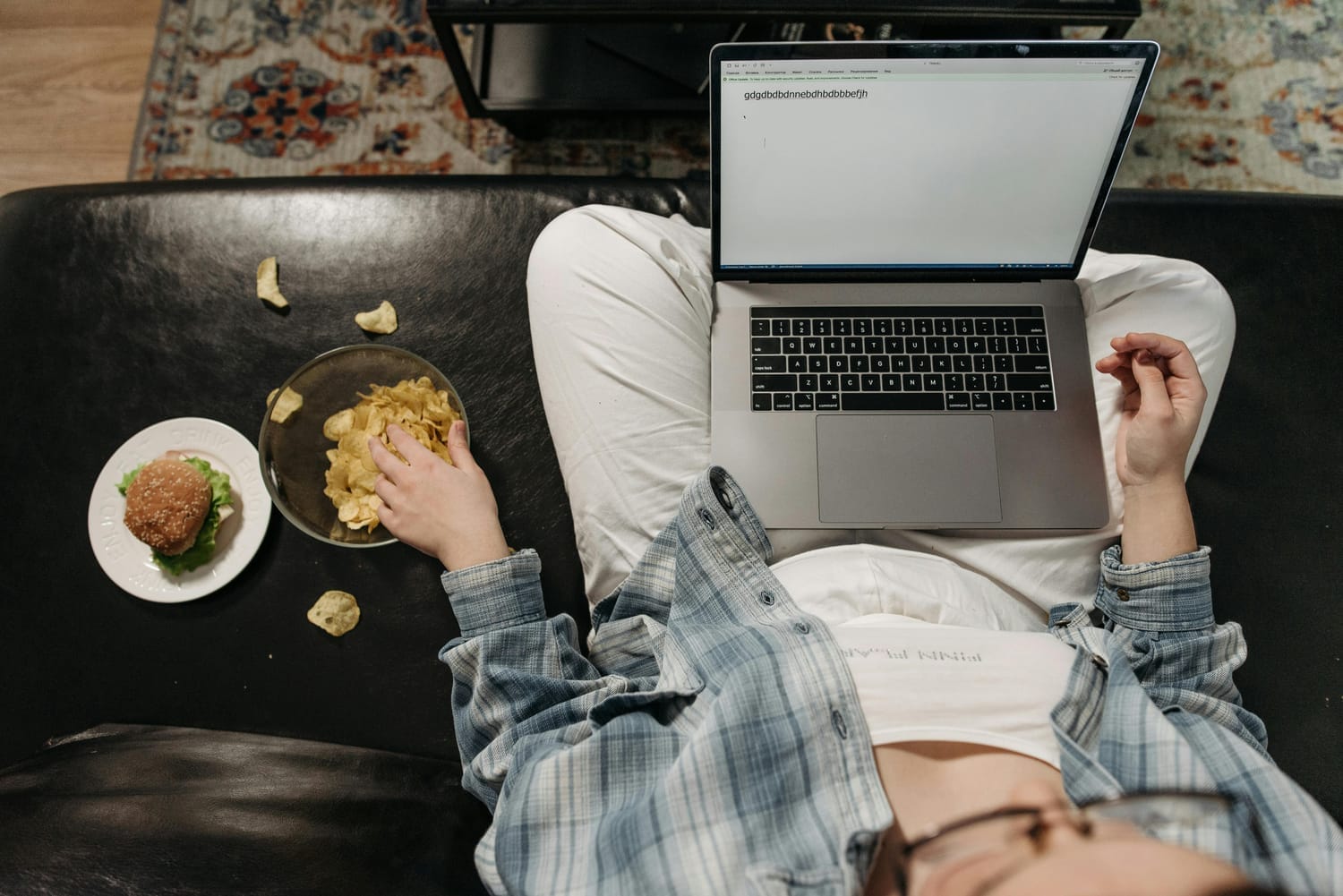
I know I have caught myself doing it - reaching for a snack as soon as I step into the kitchen, even though I wasn't hungry.
Or collapsing on the sofa and immediately grabbing my phone, completely forgetting that walk I had planned with the best of intentions.
It is easy to beat yourself up, to think you are being lazy or lacking in discipline. I know i have.
But what I have come to understand is that, this is more often than not, the incredible power of environmental cues at play. Thanks to research in how our brains respond to repeated cues, and how it is trained through this process, i have come to understand how powerfully our homes are constantly shaping our habits.
Here is the exciting part I want to share with you: once you understand how this hidden system works, you can rewire your space to reshape your life.
Welcome to Habit by Design.
"We shape our dwellings, and afterwards our dwellings shape us."
— Winston Churchill
The Neuroscience: How Your Brain Creates Habit Loops
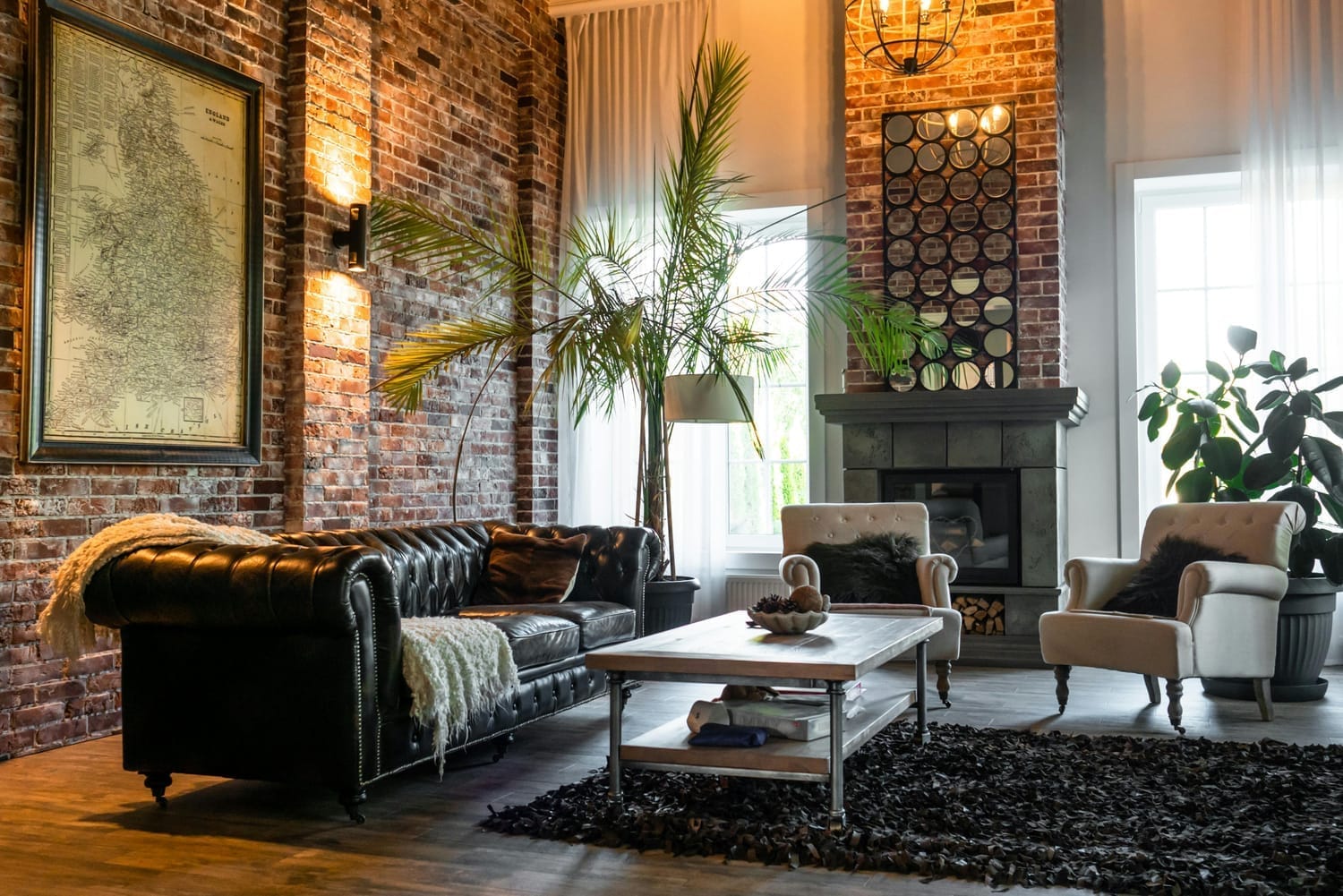
Every behaviour you repeat is built on a simple neurological formula called the habit loop. This habit loop is based on three processes:
1. Cue: Something in your environment that triggers your brain to start a behaviour.
2. Routine: The behaviour that follows (grabbing chips, scrolling Instagram, lacing up your shoes).
3. Reward: The outcome that reinforces the loop. The brain's reward system gives you a little hit of pleasure, relief, or achievement.
I discussed this in episode 18 of The Perimenopause Playbook. If you haven't listened yet, go listen here.
According to Charles Duhigg who wrote The Power of Habit, this loop is your brain's energy-saving system. Neuroscientist Ann Graybiel at MIT showed that repeated behaviours become encoded deep within the basal ganglia, creating automaticity outside conscious decision-making.
Wendy Wood from the University of Southern California found that 45% of our daily behaviours are automatic, driven largely by environment-based cues.
Your home, your objects, your layouts — they are the silent programmers of your mind.
Over time, this loop becomes automatic — etched into the basal ganglia, the deep brain structure responsible for habitual behaviour.
Your brain loves this system because it saves energy and effort.
But here is the catch:
The habit loop doesn’t care whether a behaviour is helpful or harmful - It only follows the strongest, most consistent cues in your environment.
In other words, if your couch and remote control are always together, your brain automatically associates that environment with 'relax and scroll'— even if you would rather read, stretch, or take a walk.
Why This Happens: The Neuroscience of Environmental Cues
Our brains are context-dependent learning machines.
Research from "Habits, Rituals, and the Evaluative Brain." by Anna M Graybiel in the Annual Review of Neuroscience supports this by finding that 'habits are often triggered by specific contexts or stimuli, highlighting the role of environmental cues in initiating habitual behaviors'. She notes that these behaviours can become automatic responses to certain triggers, emphasising the brain's ability to form associations between environmental contexts and habitual actions.
So, whenever you repeat a behaviour in a specific environment, your brain links that physical context with the action.
Cues in your home — objects, layouts, lighting — silently tell your brain what program to run.
The more often a cue is followed by a behaviour, the stronger that neural wiring becomes. This is why habits are so hard to think your way out of; because neurologically, it is not about exercising willpower -although that is part of the equation - It is about your brain simply responding to its environment.
In midlife, when stress regulation becomes even more delicate (especially during perimenopause), these unconscious environmental cues become even more powerful in shaping emotional well-being and daily energy levels.
The Hidden Force: Environmental Cues and Cognitive Mapping
Environmental cues are cognitive maps your brain builds to navigate the world quickly and efficiently.
Each time you perform an action in a location, your brain strengthens its contextual memory wiring system: the hippocampus.
Over time, even entering the space triggers emotional and behavioural responses before conscious thought kicks in.
Spatial Habit Architecture: A New Way to See Your Home
Here’s the paradigm shift: Your environment doesn’t just influence behaviour. It actively teaches it.
The great news is this: you can rewire your habit loops through intentional design.
If your home has been quietly reinforcing habits that don’t serve you, you are not stuck. You can change the conversation your space is having with your brain.
The practice of intentionally designing our physical spaces to scaffold the habits, emotions, and neural patterns you want to cultivate is the best way to start reshaping our environment to support our quest to break and create new habits.
Here’s how to start:
Step 1: Become a Habit Detective in Your Own Home

Start with observation, not judgment.
Ask yourself:
Where does my undesired habit happen most often?
What are the environmental triggers there?
What am I seeing, touching, hearing, or feeling right before the behaviour happens?
Example: If you always snack when you walk into the kitchen, the open snack shelf is your cue. If you scroll your phone for an hour after work, the couch and the coffee table create the loop.
Becoming aware of these environmental cues is the first step to creating a disruption to habits on autopilot.
Step 2: Break Old Loops by Modifying Your Triggers
Out of sight, out of mind: Move temptations (junk food, remote controls, screens) out of sight.
If you must keep them, make them more difficult to access.
Change the context: Rearrange your furniture slightly.
Change the use of a space associated with unhelpful habits (e.g. turn your 'scrolling chair' into your 'reading chair' with a cosy blanket and book basket). Add new sensory cues such as fresh lighting or new textures.
Create friction for unwanted habits: Make the less helpful behaviour uncomfortable to start
Keeping this in front of mind that interrupting the visual or physical cue breaks the automatic firing of the old neural loop helps to streamline the process.
Step 3: Create New Cues to Trigger Healthy Habits
Visibility is power: Place positive cues where your eyes naturally land - your journal on your pillow, your sneakers by the door, your healthy snacks front and centre.
Dedicated spaces for specific behaviours:
Meditation nook = peace
Workstation = focus
Comfortable chair = reading
Make good habits easy: Reduce the number of steps between you and your desired action. Lay out your workout clothes the night before. Keep your water bottle filled and on your desk. Find the rhythm that works for you because the beautiful thing is this: everyone is unique and different, and the process that works for one person will not necessarily work for you.
Design the habits your brain wants to follow - not ones it has to force. What this means is that you have to create the habits that your brain will recognise as beneficial to it, and which would encourage it to keep wanting to experience it. For instance, personally, i love the dopamine and serotonin hit i get from a particularly heavy lifting session. Sometimes my body resists the urge to go to the gym. However, from experience, i always love the after effects of overcoming my urge to stay home and watch a movie instead.
Habit by Design Is Deeper Than Organisation — It is Brain-Smart Living
This is more than Marie Kondo-ing your closet, although i love her ideology for decluttering your life. This hinges on understanding the neuropsychology of your behavior — and designing your environment to quietly coach you into the life you want to build.
Your home teaches you daily. Now, you get to decide what lessons it teaches you.
Why This Matters Even More in Midlife
During midlife, hormonal shifts make the nervous system more sensitive to environmental triggers.
Perimenopause brings fluctuating cortisol rhythms, emotional volatility, and sleep disturbances. When the brain is already working harder to regulate internal rhythms, external cues become even more powerful influencers of stability — or dysregulation.
In midlife, intentional space design isn’t just a luxury. It’s a form of biological self-support.
Habit by Design leads to living Life by Design.
When you understand the brain-space-habit connection, you stop blaming yourself for bad habits and start redesigning the real architecture that drives them.
Your home can be a healing ally — a memory palace of calm, focus, and daily joy — if you teach it to be.
Take Action Today
Pick one habit you want to nurture.
Find one environmental cue you can modify.
Design one small change today to support your new habit.
Then observe: How much easier does it feel when your environment works with you, not against you?
Ready to Create a Healing, Brain-Smart Home?
If you are ready to transform your space into a tool for energy, focus, emotional stability, and better habits, book a personalised 1:1 Home Diagnostic Consultation with me.
Together, we will rewire your home to rewire your life.
FAQ: Habit by Design: How Your Home Environment Quietly Reshapes Your Daily Routines
Q1: What is Habit by Design?
Habit by Design refers to the intentional practice of shaping your home environment to trigger and reinforce healthy, productive routines. It is based on the neuroscience of habit formation and the role of environmental cues in daily behaviour.
Q2: How does my home influence my habits?
Your brain links specific environments with specific behaviours. Over time, these environmental cues — like a sofa, lighting, or room layout — trigger habitual routines without conscious thought. This is known as the habit loop.
Q3: What are environmental cues?
The amygdala processes emotional responses like fear and stress, while the hippocampus stores context and spatial memory. Together, they create lasting associations between emotion and location—meaning your home literally holds memory.
Q4: Is this based on real science or just a design trend?
Yes, it’s supported by research in neuroscience and psychology. Studies by experts like Ann Graybiel (MIT) and Wendy Wood (USC) show that up to 45% of our behaviour is driven by habits, and those habits are deeply influenced by environmental triggers.
Q5: Can I really change my habits just by changing my space?
Yes — intentionally changing or removing environmental cues can disrupt old patterns and help embed new ones. This is especially powerful when combined with small, consistent behaviour changes.
Q6: What’s the first step to designing better habits?
Start with a habit audit of your space. Observe where your habits happen, what triggers them, and how your environment may be reinforcing behaviours you want to change.
Q7: What is Spatial Habit Architecture?
Spatial Habit Architecture is a framework developed by Lolade Ajai that helps people rewire their habits through intentional environmental design. It merges neuroscience with interior design to create behaviour-shaping spaces.
Q8: Does this apply to workspaces or only home environments?
It applies to any environment where habits are formed — home, office, studio, or even digital spaces. The principles are flexible and can be adapted to different settings.
Q9: How is this different from decluttering or minimalist design?
Decluttering and minimalism focus on reducing visual noise. Habit by Design focuses on shaping behaviour. It is not just about aesthetics — it’s about creating environmental triggers for the life you want to live.
Q10: How can I start implementing this in my home today?
Pick one habit you want to encourage or break. Then adjust one element in your space — visibility, layout, object placement — to either support or disrupt that habit loop. Small, intentional changes compound over time.
Want expert help designing a home tailored to your cognitive needs? Book a 1-hour Home Diagnostic Consultation today.
Let’s create a space that enhances your focus, creativity, and mental well-being. Book your1-hour Home Diagnostic Consultationto create a brain friendly and supportive home.

SHARE




POST CATEGORY