

The Hidden Psychology of Your Home: How Your Space Reshapes Your Mind
You know that moment you step through your door after a long day and you let out an unconscious, deep exhale; or something inside you feels like it can relax and release? This feeling sometimes has something do with the type of day you have had.
And many times it is your space speaking to your nervous system; and that feeling is your brain decoding your environment and relaying the way your space makes you feel, in emotions.
This past week, I have been sharing a series exploring the Neuropsychology of Space — a quiet but profoundly powerful exploration of how our built environment, particularly our homes, are in constant dialogue with our brains.
This conversation shapes our mood, influences our energy levels, impacts our ability to focus, and plays a significant role in the habits we unconsciously repeat every day.
If you have been following along, you will see that we have only just begun to scratch the surface of this fascinating connection.
If you are new to this concept or have missed some of the earlier instalments, make this journal entry your anchoring point.
Use it to gather the threads, reflect on the science, and gain a grounded look at what is truly happening behind the scenes in your home.
Beyond the Obvious - Your Brain Senses More Than You Think
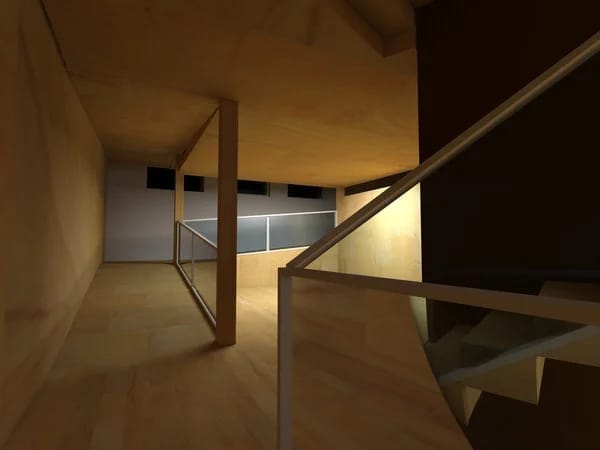
We are all aware of our five classic senses: sight, sound, smell, taste and touch. These are the senses we rely on to understand and decode our physical environment, and interactions with the world around us.
And something i discovered that is much more exciting that plays into human beings as multidimensional beings : the brain's ability to receive and process information from your environment on far more subtle levels.
Take Proprioception, for instance – your body's internal GPS. This is the sense that tells your brain where your limbs are in space without looking, how much force you are using, and if you are balanced.
Your home environment directly feeds this sense. Uneven rugs or flooring, wobbly chairs, cluttered paths and disjointed spatial planning challenge your proprioception, forcing your brain to work harder just to keep you steady.
Au contraire, a stable, well-structured space allows your proprioception to function effortlessly, contributing to a foundational, subconscious feeling of security and ease.
Research in areas like environmental psychology and spatial navigation examines how the physical characteristics of an environment (like stability and complexity) influence proprioceptive input, and its integration with other sensory systems (like our visual and vestibular sense) for balance and spatial orientation.
This quote from an article in Springer Nature Link sums up all the ways that multisensory design in interior design is absolutely integral to ensuring the balanced mental and physical wellbeing of the user:
'For it is only by recognising the fundamentally multisensory nature of perception that one can really hope to explain a number of surprising crossmodal environmental or atmospheric interactions, such as between lighting, colour and thermal comfort and between sound and the perceived safety of space.'
- Charles Spence: Senses of place: architectural design for the multisensory mind
And then there's your Vestibular Sense, your inner balance system located in your inner ear, working closely with your vision. This sense tells your brain about your head's position and movement in space relative to gravity.
Visual cues in a home, such as disorienting patterns or a lack of clear vertical lines, can conflict with your vestibular input.
This increases cognitive load and leads to subtle feelings of disorientation or anxiety. Studies in Environmental psychology suggests that visual cues impact our sense of orientation and stability.
When your space supports these fundamental senses—helping your brain feel physically grounded and oriented—it frees up valuable mental bandwidth.
Your Internal Blueprint - Spatial Cognition & How Layout Matters
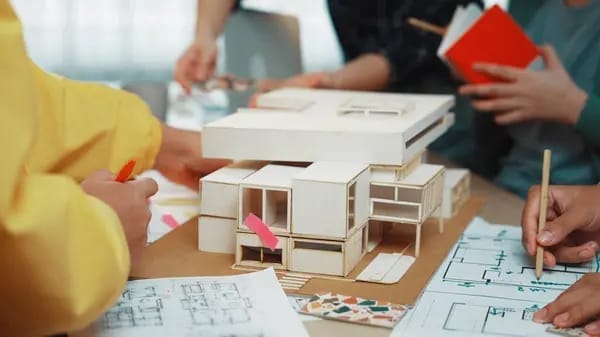
Every day, your brain is actively building and refining a cognitive map of your home – which is a dynamic mental blueprint that helps you navigate efficiently, remember where things are, and understand the spatial relationships within your environment.
When that mental map is overloaded by physical clutter, confusing room layouts, or a lack of clear zones, your brain's ability to process and navigate becomes less efficient.
This is where Focus Fatigue often starts – this constant effort of trying to make sense of a chaotic or poorly organised space drains your mental energy, reducing your capacity for focused thought or sustained attention.
Studies on spatial cognition and cognitive load clearly demonstrate how environmental complexity impacts mental resources.
Essentially, the structure of your home affects how much bandwidth your brain has available, for everything else in your life.
The Silent Scream of Too Much Input - Visual Processing & Load

Pause for a moment and consider the sheer volume of visual information in your immediate surroundings. Every object, every colour, every pattern, every bit of text - your brain is taking it all in.
This is the concept of Visual Load.
We rarely notice just how much energy the visual load in our spaces consume, until we step into a truly calm, visually uncluttered space and feel that involuntary exhale.
High visual load – caused by excessive clutter, competing colours, or too many items vying for attention – forces your brain's visual processing centers into overdrive. Neuroscience research links high visual load to increased stress responses and reduced executive function (the part of your brain responsible for focus and decision-making).
High visual load means high stress and low clarity.
A calmer, more intentional visual environment actively reduces the burden your brain bears, helping to restore a sense of peace and focus almost immediately.
If your mind often feels chaotic or overwhelmed, your space might be mirroring and amplifying that internal state.
The Subtle Suggestions - Affordances & Habit Formation
I discussed habit formation in a podcast episode and an element that i did not point out at the time, is what is known as Affordance.
If you have ever noticed that certain layouts or spatial arrangements pull you towards certain behaviors : The living room designed for lounging seems to make starting exercise feel impossible, while a dedicated workspace somehow encourages focus. This is the psychology of affordances at play.
Affordances are what an object or a space offers the possibility of doing. Your brain unconsciously scans your environment, identifying these possibilities – a comfortable chair affords sitting, a clear table affords working, a yoga mat affords stretching.
Objects, layouts, and access points all act as silent suggestions, cueing your brain towards certain actions.
And most of us are designing these powerful cues entirely by accident! We unintentionally design spaces that strongly afford behaviours we want to reduce (like having snacks visible on the counter) and don't create affordances for habits we want to cultivate (like hiding workout gear in a hard-to-reach closet).
Research on environmental cues and habit formation underscores how powerfully our surroundings trigger learned behaviours.
If you are looking to create a new, desired habit, and you want the process to run smoothly and stick, start by ensuring your space is actively suggesting that behaviour through the integration of clear affordances.
Nature's Innate Calm - Biophilia's Healing Power
Finally, we touch upon a concept deeply ingrained in our biology: Biophilia. This is our innate human need to connect with nature. From a neuropsychological standpoint, this is why being in nature, or having nature within our homes, feels so profoundly restorative.
Studies link exposure to nature elements like plants, natural light, views of greenery, natural materials, to measurable benefits like reduced stress hormones, lower blood pressure, improved mood, and enhanced cognitive function.
Your brain finds a sense of safety and calm in natural environments, promoting healing and reducing mental fatigue.
Incorporating elements of nature into your home's design leverages a fundamental biological need to create a space that nurtures your nervous system and supports your overall well-being.
The Big Picture - Your Space, Your Nervous System
Take a step back and look at the connections we have explored: Your home has an impact on your physical grounding, your ability to navigate, the visual information load on your brain, the behaviours your brain is cued to, and your fundamental connection to the calm of nature.
The science is clear and powerful: the structure of your space subtly but significantly shapes the structure of your thoughts, feelings and behaviours. Every corner, every choice of colour, every pile of clutter, and every arrangement of furniture has an effect on your brain and nervous system.
This isn't meant to overwhelm you - it's meant to empower you. It shows you that you have an incredible amount of agency in the design of your well-being through the design of your environment.
Your Empowered Action
The essential first step is to understand why your home feels the way it does and how it influences your brain. It moves you from feeling passively affected by your environment to feeling actively empowered to change it.
Small, intentional changes to your space, guided by these neuropsychological insights, can lead to profound changes in how you feel, how well you focus, and how easily you can thrive in your own home.
And if this insight has struck a chord with you, please know that there's so much more to explore. Moving from this understanding of the 'why' to implementing the concrete 'how' is where the real transformation happens.
Take Action Today
If you are ready to translate these insights into tangible changes in your own space, here are a few pathways I offer:
Dive Deeper: For a comprehensive guide with practical, step-by-step strategies grounded in neuropsychology to help you design a truly brain-friendly home, explore my e-guides to learn and implement changes you can begin making in autonomy and at your own pace. Explore the e-guides here.
Join the reinvention Mastery or Reinvention Essentials 6-month coaching program for women navigating perimenopause and postmenopause, and who want to learn how to use their spaces to support the evolution of their next chapter. Learn more about that here.
Personalised Insight: If you'd like tailored guidance on how the specific dynamics of your home environment are impacting your well-being and receive expert recommendations for change, consider booking a Home Diagnostics Session.
Ongoing Support: For continued learning, gentle accountability, and connection with a community exploring these ideas, you are welcome to join my Community. It is new and we are excited for where it is going.
FAQ: The Hidden Psychology of Your Home: How Your Space Reshapes Your Mind
Q1: Can the layout of my home really affect how I think or feel?
Absolutely. The spatial organisation of your environment shapes your brain’s cognitive map. A disorganised or unclear layout increases mental load and can contribute to stress or decision fatigue.
Q2: What is “visual load,” and why does it matter?
Visual load refers to the amount of sensory information your eyes take in. Cluttered surfaces, chaotic decor, and visual noise can exhaust your brain, subtly affecting your focus, energy, and emotional regulation.
Q3: Is there a connection between my habits and my environment?
Yes. Your brain constantly scans for cues in your space — what designers call affordances. If your space makes certain actions easier or more visible, you are more likely to do them — and the reverse is true as well.
Q4: Why do I feel instantly calmer in certain spaces, even if I can't explain why?
That is likely your nervous system responding to spatial and sensory signals — such as natural light, biophilic elements (like plants), balanced textures, and clear visual pathways. Your brain is wired to feel safe in harmonious, life-affirming environments.
Q5: How does proprioception play into home design?
Proprioception is your body's sense of itself in space. Environments that are physically stable, logically laid out, and easy to move through support this unconscious sense, helping you feel grounded, secure, and at ease.
Q6:What are some small changes I can make to reduce mental clutter at home?
Start with one surface: clear it, simplify it, and introduce one natural or calming element (like a plant or wood bowl). Less is often more for your brain.
Q7: I live in a small or shared space — do these ideas still apply?
Yes. Regardless of size: clarity and intention matter. Even small areas can be arranged to support ease, clarity, and well-being with thoughtful choices.
Q8: How does this relate to mental health?
Your physical space interacts directly with your nervous system and emotional brain. Creating a supportive environment isn’t just aesthetic — it’s a form of self-regulation and emotional hygiene.
Q9: . I feel overwhelmed — where should I begin?
Begin with awareness. Observe how different areas of your home make you feel. What energises you? What drains you? What feels peaceful? That’s the doorway in.
Q10: Where can I learn more or go deeper into this work?
You are invited to explore my e-guides, book a design consultation, or join our paid community — a space where design and neuroscience meet to support your well-being.
Want expert help designing a home tailored to your cognitive needs? Book a 1-hour Home Diagnostic Consultation today.
Let’s create a space that enhances your focus, creativity, and mental well-being. Book your1-hour Home Diagnostic Consultationto create a brain friendly and supportive home.

SHARE




POST CATEGORY