

The Home as a Neural Extension — Rewiring Your Space for a Thriving Brain
A New Way to See Your Home: Beyond Bricks and Mortar

Cognitive health doesn’t start at the gym or therapist’s office. It starts with the seen and unseen elements in your home environment: the light quality in your hallway, the chair you sit on, the colours that influence your mental states. These elements are more powerful and more profound than we are aware of, and the clearer we get on the important roles they play in our daily lives, the better we would begin to become for it.
The walls around you are not just serving the purpose of sheltering you from the outside world. These containers are active participants in your cognitive and emotional landscape. Everything you introduce into them is not just a passive design choice; it's a neural cue. Your environment is in constant conversation with your body and mind, shaping how you think, focus, and recover from stress.
The hormonal shifts heighten our sensitivity to our surroundings, and that conversation becomes even louder. The things we were once able to tolerate, or easily flew under our radar, suddenly feel like too much. That incessant hum of fluorescent lighting, the scratchy feel of certain fabrics, the visual cacophony of unchecked clutter – can suddenly feel overwhelming, even unbearable.
That’s not weakness or decline, it is all simply your nervous system calling for help.
'In order to create a space that heals, it must first be able to listen and respond'
- Lolade Ajai
This begs a crucial question: Is your home actively nurturing your brain, providing the sensory inputs it needs to thrive? Or is it inadvertently hijacking your cognitive resources, contributing to stress and hindering your overall well-being?
In this week's journal entry, we are exploring our home as a neurological extension of our brain. We will explore this connection from the lens of neuroscience and psychology. Then we will explore ways we can use this knowledge to help us create allies of our homes.
The Brain-Space Connection: Grounded in Neuroscience

Let us explore the science. This intimate connection between our brains and our environments is informed by a process called neuroplasticity – the brain's ability to reorganise itself by forming new neural connections based on repeated experiences. This process is lifelong.
Every time you walk into a room and feel stressed by visual disarray, your brain encodes that negative input, strengthening neural pathways associated with anxiety and overwhelm.
On the flip side, when you walk into a room intentionally designed with calming elements – the gentle scent of lavender, the comforting softness of a rug underfoot, the abundance of natural light streaming through a window – your brain responds by activating pathways associated with relaxation and a reduced threat response.
This theory is supported by a theory called Embodied Cognition is a growing area of research that suggests our thoughts, emotions and cognitive processes are not confined to the brain; some philosophers argue that 'the body serves the mind (cognition), such that the external world leads our body to respond in
a way that will inform and guide the mental representations that constitute thought'.
If this intrigues you, read the whole paper here
What this means is our mental states are deeply intertwined with our physical body and our interactions with the physical world around us. Your environment exerts a powerful influence on your posture, breathing patterns and more; it is actively shaping your cognitive landscape. Your home is so far removed from being a neutral player; it is actively impacting your cognitive health.
This understanding becomes particularly critical during midlife, especially throughout perimenopause and postmenopause. During these stages, women's brains are already navigating significant hormonal shifts, often leading to disrupted sleep patterns and fluctuating emotional states, among other presentations.
Similarly, men experiencing andropause—a gradual decline in testosterone—may also face cognitive fatigue, irritability, and decreased resilience. When the home environment is also characterised by chaos, sensory overload, or a lack of restorative elements, the brain is perpetually in a state of heightened alert, never truly receiving the respite it needs to function optimally.
Is Your Space Helping or Harming? A Moment of Honest Reflection
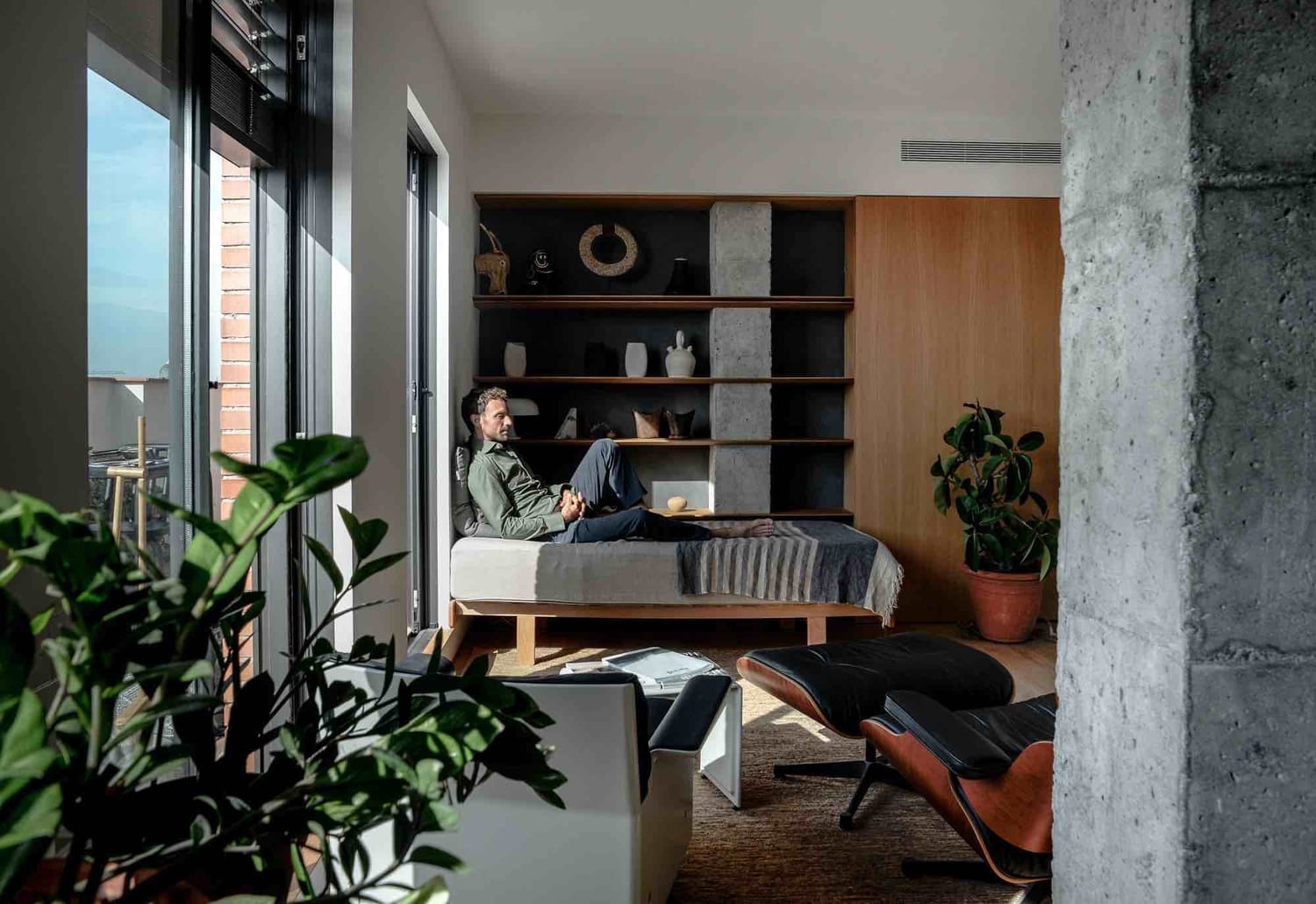
I am a big fan of asking my clients to be the detective in their own lives. The only way to begin auditing your space is, first of all, becoming aware of yourself in relationship to your environment.
Let's take a moment to do an exercise now, if you are reading this at home. Evaluate these elements and answer honestly - there is no judgement here. Only honest appraisal.
As you enter your primary living spaces – your living room, your bedroom, your kitchen – do you instinctively exhale with a sense of relief and calm, or do you unconsciously brace yourself for a feeling of unease?
Consider your primary living space right now and honestly assess the following sensory elements:
* Your lighting: Is the lighting in the room nourishing and supportive, mimicking natural light, or is it harsh, glaring, and artificial, potentially disrupting your circadian rhythm?
* Your surfaces: Are your countertops, tables, and shelves generally clear and organised, promoting a sense of calm, or are they cluttered and overflowing, contributing to visual chaos?
* Your textures: Do your spaces incorporate elements of softness, warmth, and inviting textures that encourage relaxation, or does everything feel cold, clinical, and uninviting to the touch?
* Your sound/ noise: What is the dominant soundscape of the room? Is it filled with the soothing sounds of nature, calming music, or perhaps a comfortable silence, or is there a constant low-level hum of discontent from appliances, traffic, or echoing acoustics?
* Your visual clutter: Take a broad look around. What is crowding your visual field? Are there unnecessary items, disorganised piles, or a lack of visual breathing room?
* Your temperature: Is the temperature in the room generally comfortable and conducive to relaxation and focus, or is it often too cold, too hot, or fluctuating uncomfortably?
Remember, the goal is not to achieve a Pinterest-perfect, magazine-worthy home. The true aim is to curate a regulating environment – a space that provides your brain with the consistent, positive sensory cues it needs to feel safe, clear, focused, and ultimately grounded. This is about the fundamental principles of neural design, where you are intentionally shaping your environment to support your cognitive and emotional well-being.
This Week’s Practice: The Sensory Audit - A Step Towards Neural Harmony
Alright! This is the fun part. We are going to begin this journey to rewiring your space to support your thriving brain; but we are going to do so with intention, and slowly.
Step 1: Choose ONE Room.
Select a room in your home where you spend the most significant amount of time. This could be your bedroom, your kitchen (often the heart of the home), your dedicated workspace, or any other space that holds particular importance for you.
Step 2: Perform a Sensory Audit.
Dedicate a few quiet minutes to simply being present in that chosen room. Engage all your senses and consciously observe the following six key sensory elements:
1. Lighting: Notice of the quality and source of light. Is it predominantly natural light streaming in, or is it primarily artificial? If artificial, is it bright and harsh, or dim and insufficient?
Does the lighting feel supportive and energising, or draining and headache-inducing?
2. Sound: Pay attention to the auditory environment. Is the room generally noisy due to external factors or internal echoes? Does the soundscape feel peaceful and conducive for its intended use, or is it distracting and jarring?
3. Touch: Consider the textures you encounter in the room. Are there soft, comforting textures like blankets, rugs, or upholstery? Or are there predominantly hard, cold, or scratchy materials? How do these textures make you feel?
4. Smell: Be mindful of the dominant scents in the room. Is there a natural, calming aroma, perhaps from plants or essential oils? Or are there lingering odours that are unpleasant or agitating?
This book 'Fragrant Mind: Aromatherapy for Personality, Mind, Mood and Emotion' is a wonderful read, if you want to explore aromatherapy more deeply
5. Visual Clutter: Objectively assess the amount of visual information in your field of vision. Are surfaces clear and organised, allowing your eyes to rest, or is there a sense of visual chaos from too many items, disorganised piles, or distracting patterns?
6. Temperature: Notice the overall temperature of the room. Is it consistently comfortable, or does it tend to be too cold, too hot, or fluctuate significantly, causing discomfort?
Step 3: Write Down Your Top 3 Sensory Stressors.
Based on your sensory audit, identify the three sensory elements in that room that are causing you the most stress or discomfort.
Be specific.
Important Note:
Instead of describing your sensory experience as say for instance, 'bad lighting', use more descriptive words like 'the harsh glare from the overhead fluorescent light gives me a headache or makes me anxious'. We are getting to the heart of the matter.
Step 4: Choose Just One Thing to Address This Week.
Select one of your top three sensory stressors that feels the most manageable to address in the coming week.
Focus your energy on making a small, intentional change to improve that one element. It looks like you deciding to replace a harsh lightbulb with a softer, warmer option, clearing off a cluttered surface, introducing a calming scent through an essential oil diffuser, bringing in some nature or art, or simply relocating a chair/sofa/object to create a better flow.
Remember: small spatial shifts lead to big neurological ones. This is not about achieving nirvana — it is about reducing the friction between you and your home environment. Make it your eager partner and ally in your cognitive health journey.
Join the Conversation: Share Your Insights

I am genuinely eager to hear what surfaced for you during your sensory audit.
What did you notice about your chosen room?
What were your top three sensory stressors?
If you are a member of The Playbook Community, share one specific stressor you are planning to address this week in our community forum.
If you are not or are still contemplating, send me a message with your findings. I want to celebrate your wins!
If you would love to be a part of this new and growing community, join us by clicking here
This online space is designed to be more than just a repository of information. It's a vibrant community for shared insight, personal experimentation and detective work, and mutual support.
Remember, you are not alone in this journey of intentionally shaping your home for enhanced well-being.
Final Reflection: Your Home, Your Ally in Reinvention

Your home is so much more than just a physical structure providing shelter from the elements. It is an active agent in how you process information, how you think and focus, how you experience your emotions, and ultimately, how you grow as an individual.
And if you find yourself in a season of profound reinvention, whether it's navigating the shifts of midlife or simply seeking a deeper sense of clarity and purpose, your home has the potential to be a powerful ally, guiding you along the way.
Your space isn’t just where you live. It’s where your next self is being formed—one neural cue, one colour, one room at a time.
Let your home become your trusted partner in creating a life you truly love, a life filled with calm, clarity, and vibrant energy.
Take care.
FAQ: Understanding Your Home's Impact on Your Brain
Q1: How can my home environment affect my brain health?
Your home provides constant sensory input that your brain processes. Factors like lighting, noise, clutter, and even colour can influence neurotransmitter levels, stress hormones (like cortisol), and overall brain activity. A well-designed space can promote calm and focus, while a chaotic one can contribute to anxiety and cognitive overload.
Q2: What is neuropsychology-based interior design?
It's an approach to interior design that integrates principles from neuropsychology – the study of the relationship between brain function and behaviour – to create spaces that optimise cognitive and emotional well-being. It considers how different design elements impact the brain and nervous system.
Q3: Why are women in perimenopause more sensitive to their home environment?
Hormonal fluctuations during perimenopause can heighten sensory sensitivity. Changes in oestrogen levels can affect neurotransmitters responsible for mood regulation and stress responses, making individuals more susceptible to environmental stressors like noise or clutter.
Q4: What are some immediate signs that my home might be negatively impacting my mental well-being?
Signs can include feeling consistently overwhelmed or anxious at home, difficulty concentrating, experiencing sleep disturbances, increased irritability, or a general sense of unease when you are in your living space.
Q5: What are the first three simple things I can do to improve my home's impact on my brain?
Start with decluttering one small area, optimising the lighting in a key room (e.g., using softer lamps instead of harsh overhead lights), and introducing a calming sensory element like a plant or a pleasant scent.
Q6: How does clutter specifically affect the brain?
Visual clutter can overload the brain with information, increasing cognitive load and making it harder to focus. Studies have shown that clutter can elevate cortisol levels, contributing to stress and anxiety.
Q7: Can the colours in my home really influence my mood?
Yes, colour psychology suggests that different colours can evoke different emotional responses. For example, blues and greens are often associated with calmness, while warmer tones like yellows and oranges can be energising. However, individual responses to colour can vary.
Q8: How important is natural light for brain health?
Natural light is crucial for regulating our circadian rhythm, which impacts sleep, mood, and hormone production. Exposure to natural light can boost serotonin levels, improve focus, and reduce symptoms of depression.
Q9: Is it necessary to spend a lot of money to create a brain-supportive home?
Not at all. Many impactful changes are free or low-cost, such as decluttering, rearranging furniture to improve flow, opening curtains to maximise natural light, and incorporating natural elements like plants.
Q10: How can I learn more about designing my home with neuropsychology in mind?
Explore resources on environmental psychology, biophilic design, and the neuroscience of space. Consider following experts in the field, reading books and articles, and exploring online communities focused on well-being and intentional home design. (And of course, exploring resources like my paid guides)
Want expert help designing a home tailored to your cognitive needs? Book a 1-hour Home Diagnostic Consultation today.
Let’s create a space that enhances your focus, creativity, and mental well-being. Book your1-hour Home Diagnostic Consultationto create a brain friendly and supportive home.

SHARE




POST CATEGORY