

4 Ways AI is Making Interior Design More Human-Centred and Future-Ready
Why AI in Interior Design Isn’t What You Think
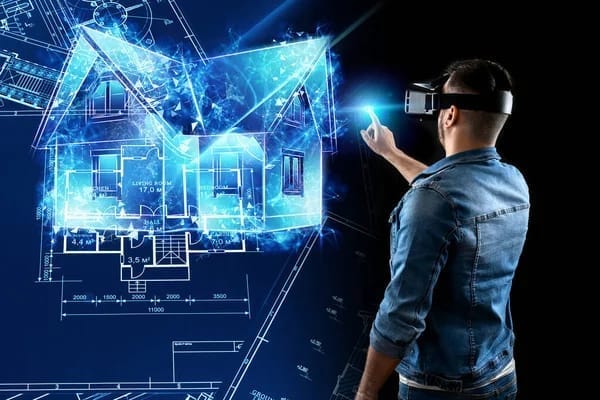
When people think about artificial intelligence (AI) in design, they often imagine algorithms producing sterile, identical rooms, or tools for creating hyper-realistic renders that truly have revolutionised the way we visualise interior spaces.
This is true in many cases, which has led to a prevalence of misleading ideas about what I believe AI is designed to be: a helper that streamlines and enhances the user's life and workflow, and a think tank.
By think tank, I mean a dynamic partner whose insights grow and evolve based on human ideas and input. It doesn't replace human creativity but rather amplifies it. It does this by processing vast amounts of data, which helps to uncover patterns that might otherwise be missed.
Rather than originating ideas from nowhere, it develops its insights from the seeds planted by human intent. Our input acts as the foundation, and AI builds on these ideas to create new, practical possibilities that take design beyond aesthetics and towards truly human-centred solutions, enhancing the human experience.
By analysing behavioural patterns, wellness data and lifestyle needs, AI enables designers to create spaces that not only look good, but also actively support mental health, emotional well-being and everyday functionality.
Curiosity peaked?
Let us dive into the first of a series of my exploration of AI innovations that will revolutionise the way that interior designers decode the design brief, shaping a future where homes adapt to people, not the other way around.
'"The most successful AI in design, won't be the one that creates the prettiest image, but the one that makes a living space feel truly alive and responsive to its inhabitants.'"
- Dr. John Maeda
The Shift: From Aesthetic-First to User-First
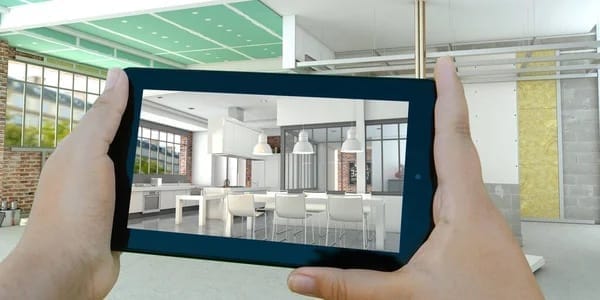
Traditionally, interior design has focused on visual storytelling: colour palettes, spatial flow, and material selection.
This design process is crucial to building a robust picture of how the space not only looks but also how it feels. However, until more recently, the needs of the user - emotional wellbeing, cognitive health, and sensory comfort - have been overlooked in the mix.
Now, thanks to collaborations between designers, neuroscientists, psychologists and artists, we understand that the built environment has a direct impact on mental health, productivity, and even hormonal regulation.
For example, studies show that light exposure affects our circadian rhythms, influencing sleep quality, energy levels, and mood regulation [Harvard Health].
AI takes this understanding further, translating insights into actionable design solutions that respond dynamically to human behaviour.
Now, let us explore some of these innovative inventions that will help us achieve these:
Examples of Human-Centred AI in Action
Circadian Lighting: We all know by now how important light exposure is to the human ecosystem, or the body's circadian clock. It regulates everything from how energised we feel in the morning to how well we can fall and stay asleep at night.
I have a podcast episode on this subject. If you are curious, listen here.
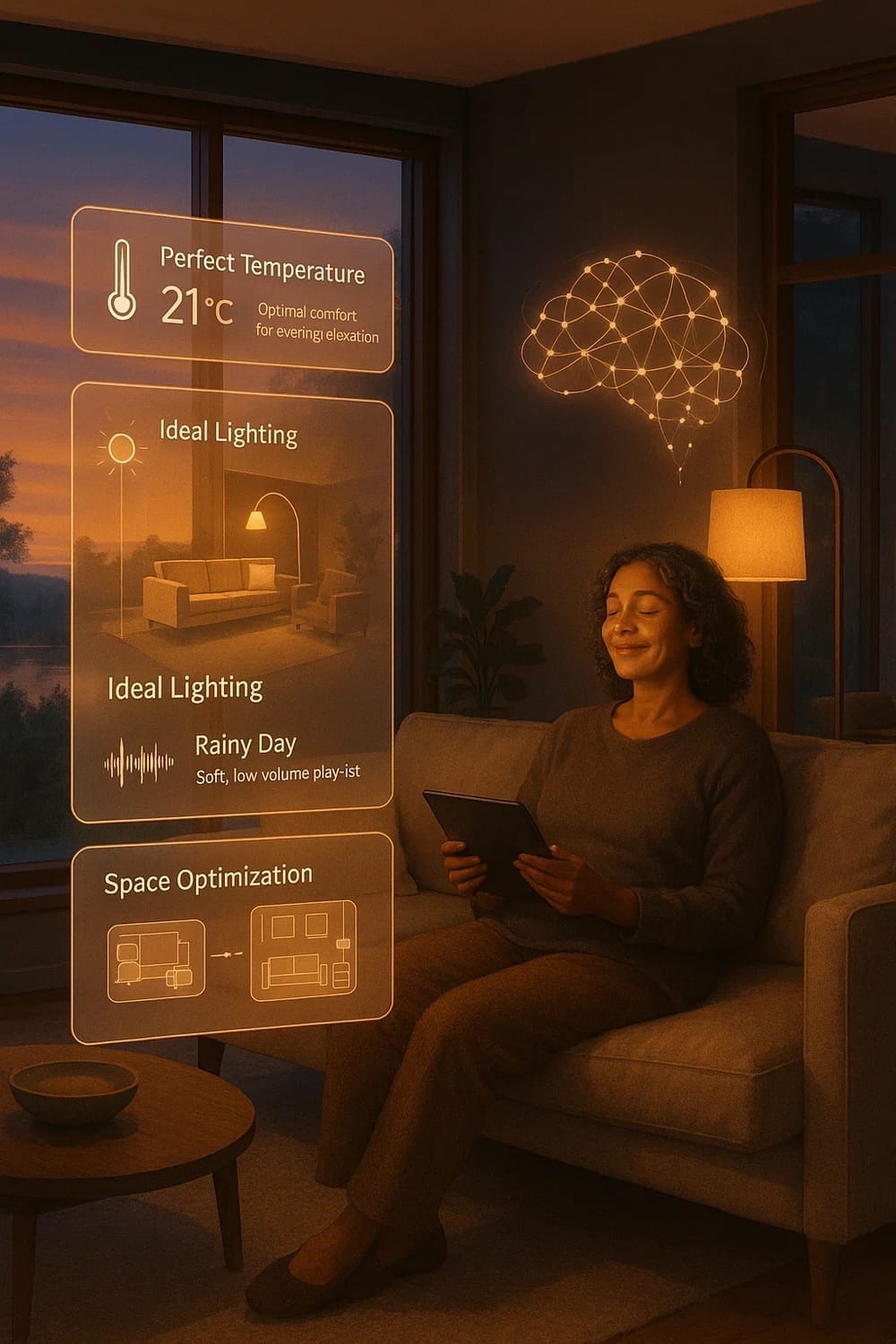
Imagine a home that knows you wake up at 7 am thanks to your sleep/wake cycle. Your bedroom lights gradually increase in brightness to simulate a natural sunrise, gently waking you in tune with the rhythm of the sun. In the evening, the lights automatically shift to a warmer, softer tone to minimise blue light exposure and promote melatonin production, improving your sleep quality.
Acoustic Intelligence: Noise pollution is one of the identified stressors for people sensitive to noise levels. It disrupts the brain's ability to create a focused state and a state of rest and restoration when needed.
In a shared home, for example, AI can use embedded sensors to recognise how a space is being used. If you are on a video call in the living room, for example, the system can automatically play a subtle white noise track to mask background street noise. When the family gathers for dinner, the soundscape can shift to a soft, ambient playlist.
Predictive Layouts: Now, this one I am a little excited about and looking forward to testing on a real project. AI can analyse foot traffic and object usage via computer vision and IoT sensors. For example, suppose it detects that you frequently walk around your coffee table. In that case, a predictive layout tool might suggest a new furniture arrangement to optimise flow and reduce the cognitive load from navigating a cluttered path.
Mood-Responsive Design: Wearable tech. is all the rage, and I don't see it going away. AI can integrate data from wearable devices, such as heart rate variability or skin temperature. If your watch detects a rise in your stress levels, the home's AI could respond in real time by dimming the lighting, activating a calming scent from a smart diffuser, or playing a tranquil soundscape to help you relax.
The Technology Powering AI in Interior Design
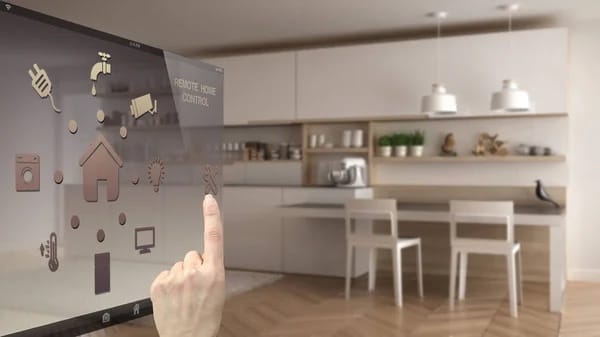
These are all very exciting, and I bet you are wondering how these complex feats can be achieved simply.
I am someone who appreciates a relaxed and uncomplicated way of life, so i find the notion of a technologically advanced interface between me and my light switch somewhat overwhelming.
But before we look at how these systems can be adapted to complex living situations, let's examine the technologies that will make this possible.
So how does AI achieve these feats? The answer lies in the process of data collection and adaptive learning. Top three processes are:
IoT Sensors: These are devices embedded in your home (like smart thermostats, motion sensors, and smart speakers) that collect data and measure variances of temperature, light, sound, and movement.
Computer Vision: These are cameras in smart devices that analyse foot traffic patterns and object usage in a private, anonymised way to understand how spaces are being used.
Biometric Integration: AI platforms can securely integrate with personal devices like smartwatches to monitor biological signals related to stress, sleep, and heart rate variability.
Combined, these tools give designers unprecedented insight into user needs while maintaining a user-first approach.
The Challenges: Privacy, Cost, and Ethics
"AI isn't here to replace human creativity; it's here to expand our ability to empathise and design for deeper human needs."
- Joi Ito
Alright. Let us get down to the meat and potatoes of the main pushbacks i have experienced in the process of integrating AI into the design process. All of these points are legitimate and bear looking into and putting checks and legislation in place that fully protect the user.
With all of this human data being collated and stored on a knowledge platform, it begs the question of 'while this is necessary to integrate data to create supportive environments, who has access to this intimate information about individuals' personal lives and life rhythms?'
So yes, this technology comes with many layers of complexity, as it should. So a truly human-centred approach must also address these challenges head-on:
Privacy and Security: The collection of data—especially biometric data—raises significant privacy concerns. Future systems must be built with robust encryption and give users complete control over what data is collected and how it is used. The user must be the ultimate authority on their information.
Cost and Accessibility: I will die on the hill of championing the cause of making design accessible to everyone (within reason). As with all new and shiny objects, the technology required for these advanced systems is currently expensive.
The challenge for the industry is to make these human-centred solutions accessible to a broader market, not just the luxury sector.
Ethical Oversight: Who decides what a ‘healthy’ or ‘calming’ environment is? The algorithms must be transparent and designed with ethical oversight to avoid imposing an impersonal, algorithmic ideal onto a human being.
So it is the designer's duty to ensure AI reflects individual preferences, not rigid algorithmic ideals.
AI as a Catalyst for Human-Centred Design
“The future of design is not about creating things that are just beautiful, but about using data to understand and solve human problems."
- Tim Brown
I had this conversation with an older family member a few weeks ago, where she told me my work is becoming obsolete, because everyone can design their spaces now with AI.
This is a common fear-mongering I am seeing everywhere (particularly among the untrained and uninitiated - no offence intended) and which has sparked a conversation in the architecture and interior design space.
The reality is this. An architect or interior designer who knows their onions and who has been through the rigorous training required to use the title ‘architect ' or interior designer ', understands that this is not a threat to their livelihood.
The opposite is the case.
1. First of all, AI can process vast data sets, but it cannot feel…yet
The role of the interior designer becomes even more vital: translating these insights into spaces that not only function but also resonate emotionally, spiritually, and aesthetically.
The future is not AI or humans — it’s AI + humans. Designers who embrace AI as a collaborator will create homes that are smarter, kinder, and more deeply aligned with human needs.
2. The conversation around AI in design often centres on beautiful renderings — quick, glossy visuals that make it seem as though technology has replaced the role of the designer.
If you are an interior designer reading this, you understand that aesthetics alone do not make a home functional, supportive, or sustainable for the user.
This is where the distinction becomes essential. Interior decorators and DIY enthusiasts tend to stop at surface-level aesthetics, relying on generated ideas pulled from everywhere on the internet and created into a mashup of random algorithms on the World Wide Web, but design is much deeper.
It is about the science of how people live, think, and feel in a space. It is about anticipating behaviours, supporting mental and cognitive health, and aligning environments with real human needs.
AI will undoubtedly threaten those who operate purely on aesthetic intuition — because algorithms can now generate trend-driven colour palettes, furniture arrangements, or Pinterest-worthy inspiration boards in seconds.
But for trained designers who ground their process in rigorous research, neuroscience, and psychology, AI is not a threat. It is an amplifier. It provides richer data, predictive insights, and new ways to validate design choices, making human-centric design even more intentional.
The future belongs to designers who merge human insight with machine intelligence: using AI to accelerate research, validate choices, and create environments that are not only beautiful but biologically supportive.
AI is not here to strip away the artistry of design — it’s here to make spaces more adaptive, intuitive, and supportive of human well-being.
By blending data science with empathy, interior designers can now create environments that anticipate needs, nurture emotions, and promote health.
The future of interior design isn’t just about beautiful spaces. It’s about smarter, kinder homes and workplaces where AI empowers designers to do what they do best: create spaces that feel like home.
That’s Part 1.
In Part 2, we’ll explore how AI predicts lifestyle changes — from ageing in place to evolving family dynamics — and how design can preemptively adapt.
Take Action Today
If you are ready to translate these insights into tangible changes in your own space, here are a few pathways I offer:
Dive Deeper: For a comprehensive guide with practical, step-by-step strategies grounded in neuropsychology to help you design a truly brain-friendly home, explore my e-guides to learn and implement changes you can begin making in autonomy and at your own pace. Explore the e-guides here.
Join the Reinvention Mastery or Reinvention Essentials 6-month coaching program for women navigating perimenopause and postmenopause, and who want to learn how to use their spaces to support the evolution of their next chapter. The next cycle begins July 1st. Learn more about that here.
Personalised Insight: If you'd like tailored guidance on how the specific dynamics of your home environment are impacting your well-being and receive expert recommendations for change, consider booking a Home Diagnostics Session.
Ongoing Support: For continued learning, gentle accountability, and connection with a community exploring these ideas, you are welcome to join my Community. It is new and we are excited for where it is going.
Frequently Asked Questions: AI in Interior Design
1. Will AI replace interior designers? No. AI supports designers by providing data-driven insights but cannot replace human creativity, empathy, and cultural context.
2. How does AI make interior design more human-centred? AI analyses behavioural and biometric data to design spaces that improve sleep, reduce stress, and optimise daily living.
3. Is AI in interior design affordable? Currently, many solutions are high-cost. However, as smart-home technologies scale, affordability will improve.
4. What are the risks of AI in design? Privacy concerns, high costs, and ethical issues around defining “healthy” environments are key risks.
5. Can AI help with sustainability in design? Yes. AI can optimise energy usage, detect inefficiencies in layouts, and suggest eco-friendly materials, supporting sustainable living.
6. How is AI used in commercial interior design? In offices, AI-driven layouts improve productivity by balancing focus and collaboration zones. In healthcare, environments adapt to patient well-being.
Want expert help designing a home tailored to your cognitive needs? Book a 1-hour Home Diagnostic Consultation today.
Let’s create a space that enhances your focus, creativity, and mental well-being. Book your1-hour Home Diagnostic Consultation to create a brain friendly and supportive home.

SHARE




POST CATEGORY